



Abstract
Background: Cumulative biological, hormonal, and environmental exposures progressively erode the structural and functional integrity of facial skin, manifesting clinically as wrinkles, loss of elasticity, dehydration, and compromised barrier function. Topical interventions that act on multiple skin parameters simultaneously remain a central focus of dermatological research, particularly for adults entering and progressing through the fourth to seventh decades of life.
Objective: To evaluate the efficacy of SKINSPANⓇ Advanced Skin Serum on six dermatological parameters — wrinkles, skin texture, red areas, elasticity, moisture, and transepidermal water-loss (TEWL) — under controlled-panel conditions over an 8-week period of twice-daily application.
Methodology: In an open-label, in-use efficacy study (N = 20; age 35–65; one male, nineteen females), participants applied SKINSPANⓇ Advanced Skin Serum twice daily to the face for 8 weeks. Instrumental assessments were performed at baseline (T0), 4 weeks (T4), and 8 weeks (T8). Wrinkles, texture, and red areas were quantified using the Canfield VISIA® imaging system. Skin elasticity was measured with the Delfin ElastiMeter. Stratum corneum hydration was measured by Corneometer® CM 825. TEWL was measured by Tewameter® TM 300. Hydration and TEWL were additionally measured 30 minutes post-application (T30 min) to capture immediate effects. Clinical evaluation was conducted by a board-certified dermatologist using the Glogau photoaging scale. Statistical analysis used paired two-tailed t-tests with α = 0.05.
Results: After 8 weeks, wrinkle feature counts decreased by 30.8% (p < 0.001) and wrinkle absolute score decreased by 20.9% (p = 0.002), both statistically significant versus baseline. Skin elasticity increased by 26.2% at 8 weeks (p = 0.001). VISIA texture absolute score increased by 13.6% at 8 weeks (p = 0.007), consistent with improved skin smoothness. Stratum corneum hydration rose 21.0% within 30 minutes of first application (p < 0.001), with maintained levels above baseline at 8 weeks. TEWL decreased significantly by 19.4% at 30 minutes (p = 0.001), indicating immediate reinforcement of the skin barrier; barrier function remained non-significantly improved at 8 weeks. The product was well tolerated, with no adverse events. In self-assessment, 90% of users agreed their skin felt more elastic and hydrated, and 85% would recommend the product.
Conclusion: SKINSPANⓇ Advanced Skin Serum delivered statistically significant, measurable improvements in wrinkles, elasticity, and texture after 8 weeks of twice-daily use. The formulation provided an immediate moisturising and barrier-reinforcing effect within 30 minutes of first application. Tolerability was excellent across the panel. These data support the positioning of SKINSPAN™ Advanced Skin Serum as a scientifically validated topical longevity formulation for adults aged 35–65.
In this study
Introduction
Facial skin is the body’s largest visible interface with the environment and the principal site at which the visible signatures of biological ageing accumulate. From approximately the fourth decade of life onward, dermal collagen synthesis declines at an estimated 1.0–1.5% per year¹, elastic fibres become progressively fragmented², and the cumulative effects of ultraviolet radiation, oxidative stress, and reduced lipid output of the stratum corneum manifest clinically as wrinkles, sagging, dehydration, and uneven texture³.
These structural changes are accompanied by a functional decline in the skin barrier. The stratum corneum loses its capacity to retain water, transepidermal water-loss rises, and the skin enters a state of chronic low-grade dehydration that further compromises mechanical resilience and visible quality⁴. In adults aged 35–65 — the demographic in which biological skin ageing becomes most clinically apparent — these changes are the principal driver of the demand for evidence-based topical interventions.
Cosmetic serums positioned within the longevity category increasingly aspire to address these mechanisms in concert, rather than targeting a single phenotype in isolation. Under European Regulation (EC) No 1223/2009, any efficacy claim must be substantiated by reliable and verifiable evidence. The COLIPA Efficacy Evaluation Guidelines (May 2008) define the methodological standard for such substantiation: controlled-panel studies with validated instrumental endpoints, conducted under standardised environmental conditions, with dermatological supervision and pre-specified statistical analysis.
Background
Visible skin ageing reflects the convergence of two distinct but overlapping processes: intrinsic chronological ageing, driven by genetic and hormonal programmes, and extrinsic ageing, driven primarily by ultraviolet radiation and environmental stressors⁵. Both processes converge on the dermal extracellular matrix, where progressive loss of type I collagen, fragmentation of elastic fibres, and reduced glycosaminoglycan content jointly produce the clinical phenotype of wrinkles, laxity, and reduced elastic recovery⁶.
In parallel, the stratum corneum — the outermost epidermal layer — undergoes a progressive thinning and lipid impoverishment that reduces its capacity to retain water. The result is a measurable increase in transepidermal water-loss and a chronically dehydrated resting state⁷. Hydration of the stratum corneum is one of the most modifiable parameters in cosmetic intervention, with measurable improvements observable within minutes to hours of topical application of well-formulated serums.
Effective topical interventions must therefore address multiple endpoints concurrently: (i) the appearance of wrinkles, both in count and in composite severity; (ii) the mechanical resilience and elastic recovery of the skin; (iii) the smoothness and evenness of the skin surface; and (iv) the hydration state and barrier integrity of the stratum corneum. The present study was designed to provide an instrumented, dermatologist-supervised evaluation of SKINSPAN® Advanced Skin Serum against each of these endpoints.
Formulation: Active Ingredients & Mechanistic Rationale
SKINSPANⓇ Advanced Skin Serum is formulated as a multi-active topical system structured around four biological pillars of skin ageing: declining cellular energy (NAD⁺), reduced cellular renewal (autophagy), progressive loss of dermal structural proteins (collagen and elastin), and weakening of the stratum corneum barrier. Each pillar is addressed by a dedicated active ingredient or ingredient combination, drawn from suppliers with clinical research at the raw-material level.
Table 1: Active ingredients in SKINSPANⓇ Advanced Skin Serum.
| Active (Trade Name) | Mechanism of action | Percentage of use |
| RejuveNAD™ | Upregulates NAMPT in vitro → endogenous NAD⁺ biosynthesis in skin cells → visibly reduced fine lines and crow’s feet, more energised-looking skin | 2% |
| Cellaigie™ | Modulates mTOR signalling in vitro → supports cellular renewal and autophagy → visibly firmer, smoother, more refined skin texture | 2% |
| PhytoCellTec™ Exosomes | Plant exosomes engage fibroblasts in vitro → stimulate collagen III, collagen XVI and elastin production → visibly plumper, firmer, more elastic skin | 0.4% |
| Ectoin | Extremolyte; binds water around membrane structures in vitro → protects cells from osmotic stress → visibly soothed, deeply hydrated, more resilient skin | 2% |
| Niacinamide | NAD-coenzyme precursor; stimulates ceramide synthesis in vitro → reinforces skin barrier → visibly more even tone, refined surface, healthier-looking complexion | 3% |
| LMW Hyaluronic Acid | Penetrates stratum corneum; binds up to 1,000× its weight in water → instant plumping, smoothing, and visibly dewy hydration | 0.11% |
| Beta-Glucan | Engages dectin-1 receptors in vitro → activates innate repair signalling → visibly soothed, calmer, less red-looking skin | 0.04% |
| Betaine | Natural osmolyte; regulates intracellular water balance in vitro → sustained humectancy → visibly softer, plumper, more comfortable skin | 2% |
Positioning of Skinspan Advanced Skin Serum Formulation
SKINSPANⓇ Advanced Skin Serum was developed by AVEA Life AG as a multi-parameter topical formulation for adults aged 35–65, designed to address wrinkles, elasticity, skin smoothness, hydration, and barrier function in a single serum format. The product is positioned within AVEA’s longevity skincare line as a daily-use, twice-daily ritual intended for integration into both morning and evening routines.
The serum is formulated to deliver effects at two complementary timescales. The first is the immediate timescale — measurable within minutes of application — characterised by deposition of water-binding actives at the surface, occlusion of the stratum corneum, and reinforcement of the barrier as quantified by transepidermal water-loss. The second is the cumulative timescale — measurable over weeks of consistent use — characterised by improvements in the structural appearance of wrinkles, gains in elastic recovery, and progressive smoothing of the skin surface.
The present study was commissioned to provide an independent, instrument-based assessment of SKINSPAN® Advanced Skin Serum on both timescales, following the standard 8-week in-use protocol with twice-daily application.
Table 2: Test Product Specification
| Attribute | Specification |
| Product name | SKINSPANⓇ Advanced Skin Serum |
| Product type | Topical facial serum |
| Sponsor | AVEA Life AG |
| Manufacturer | Naturalps Sarl / Temmentec AG |
| Batch number | 166832 |
| Regulatory compliance | EC/1223/2009 (cosmetics regulation) |
| Application protocol | Twice daily (morning and evening), full face |
| Study duration | 8 weeks |
| Normative reference | COLIPA Efficacy Evaluation Guidelines, May 2008 |
Results and Discussion
Panel disposition and safety
Twenty (N = 20) healthy adult volunteers were enrolled (19 females, 1 male; mean age 51.3 years; range 39–65). Nineteen participants had normal skin and one had sensitive skin. All twenty participants completed the 8-week protocol; no withdrawals occurred. No adverse events were recorded. None of the participants developed signs or symptoms of irritant or allergic contact dermatitis, and the product was well tolerated across the full panel.
Wrinkle reduction
SKINSPANⓇ Advanced Skin Serum produced statistically significant reductions in both wrinkle measures by Week 4, with the effect sustained through Week 8. Mean wrinkle feature counts decreased from 90 at baseline to 62 at Week 4 (−31.7%) and 63 at Week 8 (−30.8%). The wrinkle absolute score, a composite reflecting total size, area, and intensity, decreased from 32,873 at baseline to 28,413 at Week 4 (−13.6%) and 26,016 at Week 8 (−20.9%), demonstrating progressive deepening of the effect over time.
Table 3: Wrinkle measurements at baseline, 4 weeks, and 8 weeks. Both feature counts and absolute score show statistically significant reductions sustained through Week 8.
| Parameter | Baseline (T0) | Week 4 | Week 8 | Δ vs Baseline (Wk 8) | p (Wk 8) |
| Feature counts | 90 | 62 | 63 | −30.8% | < 0.001 |
| Absolute score | 32,873 | 28,413 | 26,016 | −20.9% | 0.002 |
 Graph 1: Graphical representation of average number of wrinkles (feature counts)
Graph 2: Graphical representation of average number of wrinkles (absolute score)
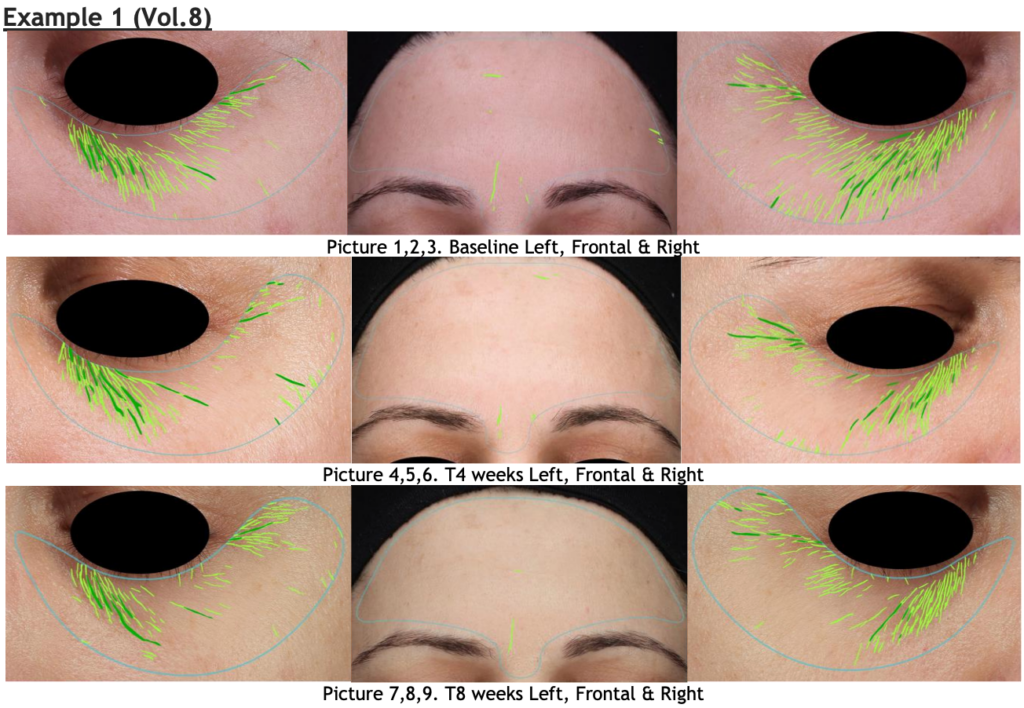
Example 1: In the VISIA pictures below, light green lines denote the fine wrinkles whereas the darker green lines denote deeper wrinkles.
Skin texture (smoothness)
The VISIA texture absolute score, a composite reflecting surface evenness and smoothness, increased from 10,440 at baseline to 11,604 at Week 4 (+11.1%; p = 0.041) and 11,865 at Week 8 (+13.6%; p = 0.007). Both improvements were statistically significant. The feature-counts metric did not change significantly across the study, reflecting that the formulation’s primary action on texture is on overall surface composition rather than on the discrete count of micro-features.
Table 4: VISIA texture measurements. Absolute-score gains were statistically significant at both timepoints.
| Parameter | Baseline (T0) | Week 4 | Week 8 | Δ vs Baseline (Wk 8) | p (Wk 8) |
| Absolute score | 10,440 | 11,604 | 11,865 | +13.6% | 0.007 |
| Feature counts | 1,706 | 1,708 | 2,156 | +26.4% | 0.189 (n.s.) |
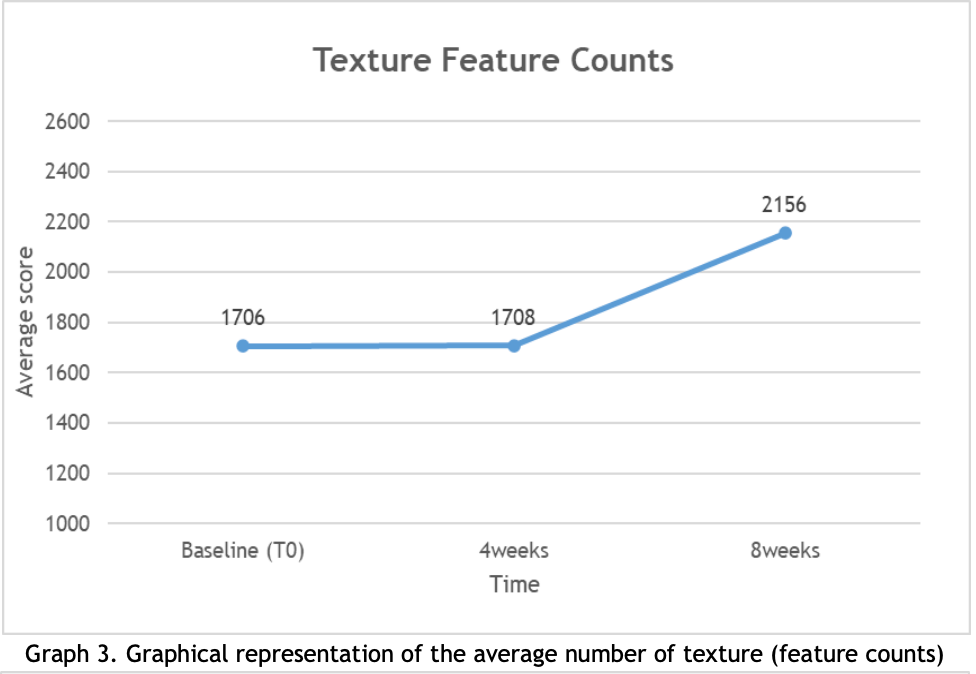
Graph 3: Graphical representation of the average number of texture (feature counts)
Graph 4: Graphical representation of the average number of texture (absolute score)
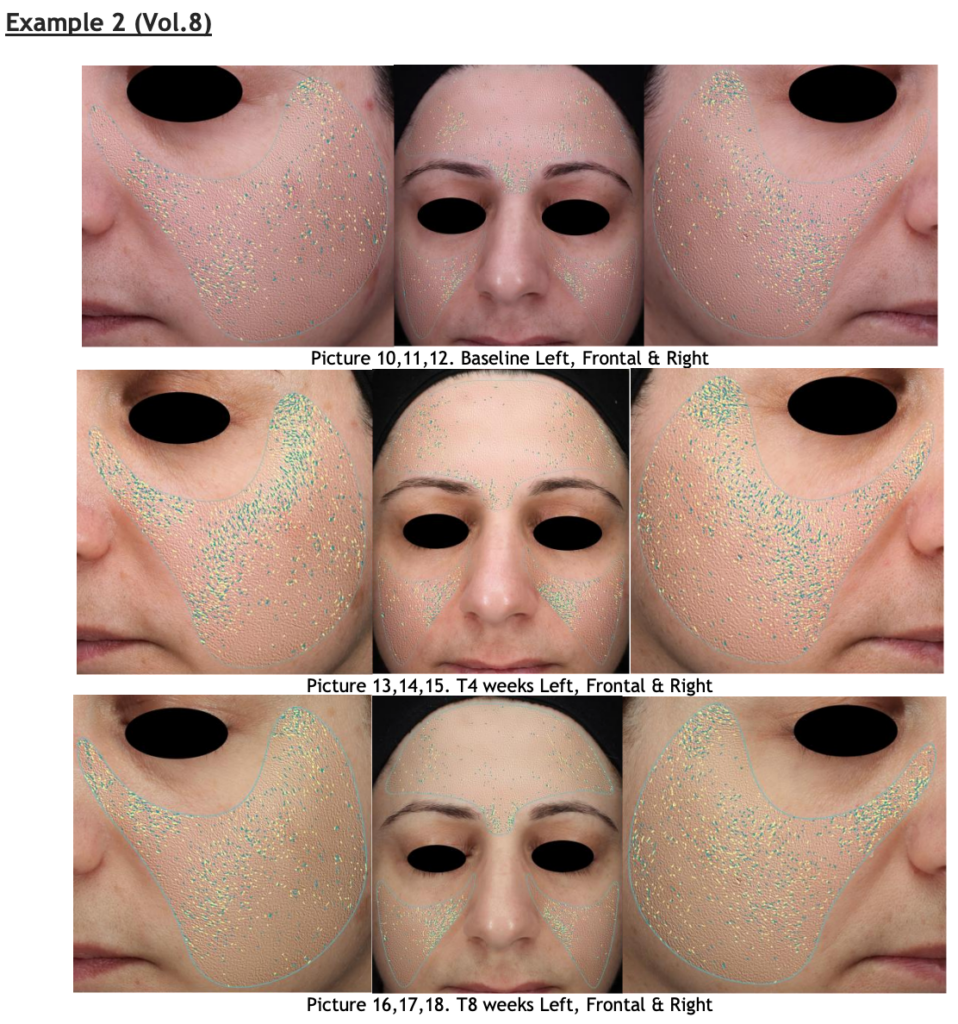
Example 2: In the VISIA pictures below, Texture is primarily an analysis of skin smoothness. The texture is presented by yellow for raised areas and blue for depressions.
Red areas
No statistically significant reduction in red areas was observed over the 8-week period. Feature counts increased marginally and non-significantly across the study (41 at baseline; 44 at Week 4; 45 at Week 8). The absolute score for red areas showed a non-significant increase at Week 4 and a statistically significant increase at Week 8 (+14.2%; p = 0.005). The serum is therefore not positioned as a redness-targeted formulation.
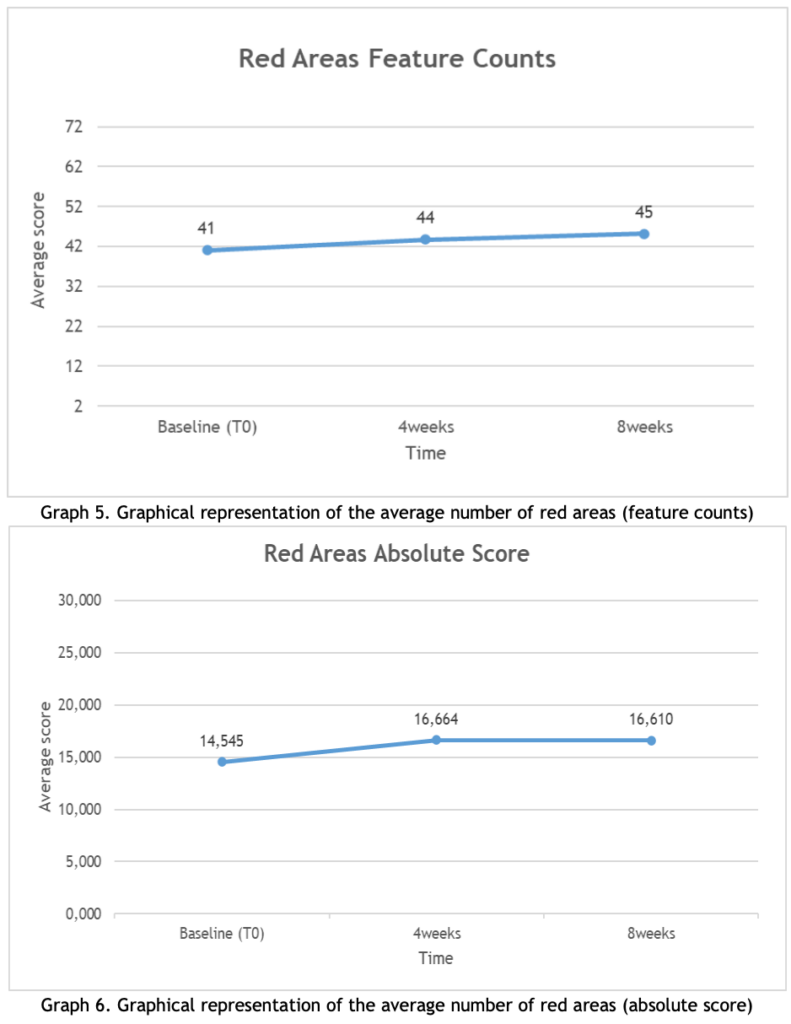
Graph 5: Graphical representation of the average number of red areas (feature count)
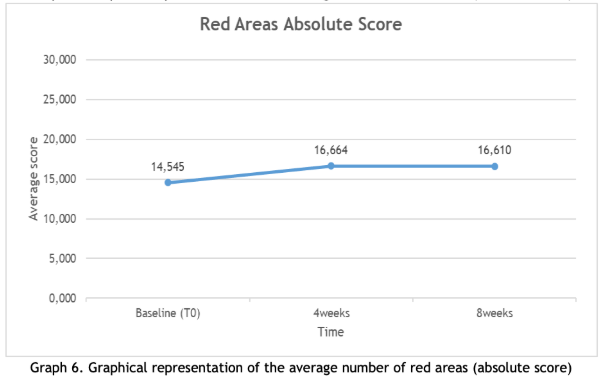
Graph 6: Graphical representation of the average number of red areas (absolute score)
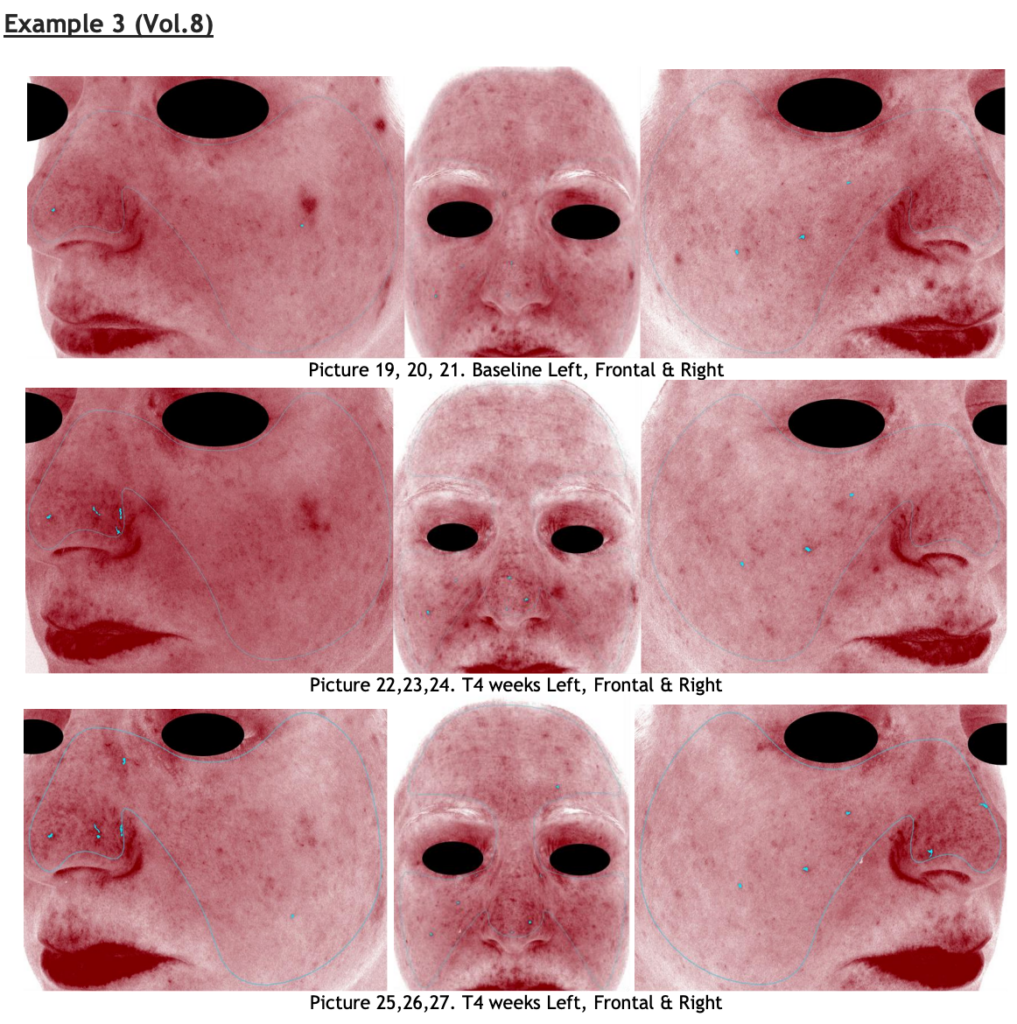
Example 3: In the VISIA pictures below, red areas can represent a variety of conditions such as acne, inflammation, rosacea or spider veins. They are represented by light blue areas.
Skin elasticity
Skin elasticity, measured as Instant Skin Elasticity on the malar area, increased substantially and significantly from baseline. Mean values rose from 44 at baseline to 57 at Week 4 (+29.6%) and 55 at Week 8 (+26.2%). Both timepoints differed significantly from baseline (p = 0.001), indicating a rapid and sustained gain in skin elastic recovery.
Table 5: Skin elasticity measurements over the 8-week period.
| Parameter | Baseline (T0) | Week 4 | Week 8 | Δ vs Baseline (Wk 8) | p (Wk 8) |
| ISE (ElastiMeter) | 44 | 57 | 55 | +26.2% | 0.001 |
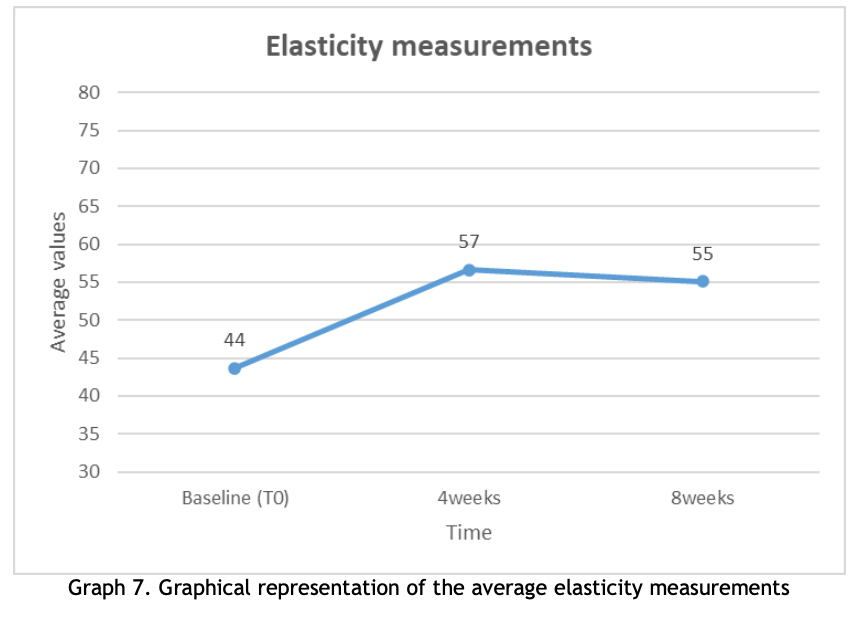
Graph 7: Graphical representation of the average number of elasticity measurements
Stratum corneum hydration
SKINSPANⓇ Advanced Skin Serum delivered an immediate and pronounced hydration effect. Mean corneometer readings rose from 60.40 AU at baseline to 73.06 AU at 30 minutes post-application (+21.0%; p < 0.001), confirming a statistically significant immediate moisturising effect after a single use. Hydration at Week 4 (56.40 AU) was non-significantly below baseline, and at Week 8 (65.01 AU) was non-significantly above baseline (+7.6%; p = 0.071). These measurements were taken following a controlled cleansing protocol on the morning of assessment, which represents a more stringent test of long-term skin hydration state than continuous-use measurements.
Table 6: Corneometer® readings on cheek skin. A statistically significant immediate hydration effect was observed within 30 minutes of first application.
| Timepoint | Mean (AU) | Δ vs Baseline (Wk 8) | p-value | Interpretation |
| Baseline (T0) | 60.40 | — | — | Reference |
| +30 minutes | 73.06 | +21.0% | < 0.001 | Significant immediate effect |
| Week 4 | 56.40 | −6.6% | 0.151 (n.s.) | No significant difference |
| Week 8 | 65.01 | +7.6% | 0.071 (n.s.) | Trend above baseline |
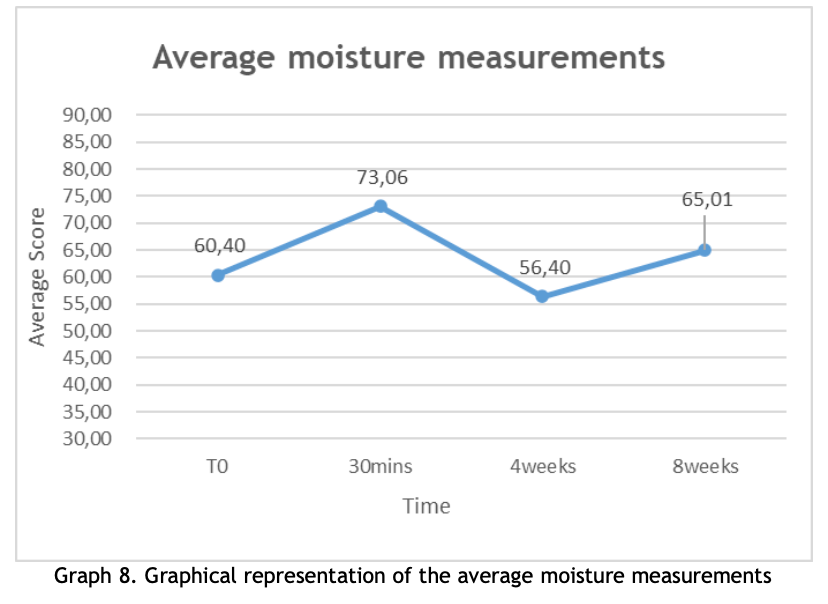
Graph 8: Graphical representation of the average count of moisture measurements
Transepidermal water-loss and skin barrier
TEWL decreased significantly within 30 minutes of first application, from 7.21 g·h⁻¹·m⁻² at baseline to 5.81 g·h⁻¹·m⁻² (−19.4%; p = 0.001), indicating an immediate reinforcement of barrier function. Values returned to baseline at Week 4 (7.20; p = 0.973) and trended below baseline at Week 8 (6.70; −7.1%; p = 0.196), consistent with maintained — though not statistically separated — barrier function across the use period.
Table 7: Tewameter® readings. Statistically significant immediate barrier reinforcement was observed at 30 minutes, with non-significant maintenance through Week 8.
| Timepoint | Mean (g·h⁻¹·m⁻²) | Δ vs Baseline (Wk 8) | p-value | Interpretation |
| Baseline (T0) | 7.21 | — | — | Reference |
| +30 minutes | 5.81 | −19.4% | 0.001 | Significant immediate effect |
| Week 4 | 7.20 | −0.2% | 0.973 (n.s.) | Maintained at baseline |
| Week 8 | 6.70 | −7.1% | 0.196 (n.s.) | Trend below baseline |
 Graph 9: Graphical representation of the average transepidermal water-loss measurements
Clinical evaluation
On the Glogau photoaging scale, the supervising dermatologist recorded improvement in 3 of 20 volunteers across the 8-week period, with no participant deteriorating. The remaining 17 participants maintained their baseline Glogau classification. The product was well tolerated, with no adverse cutaneous events.
Participant self-assessment
After 8 weeks of use, participants rated the product across 11 questionnaire items. Key results are summarised below.
Table 8: Participant self-assessment after 8 weeks of twice-daily use (N = 20). Satisfaction rate was calculated as the weighted percentage of agreement across the 1–5 Likert scale, or as the direct yes-response rate for binary items.
| Parameter | Satisfaction rate |
| The product’s texture is pleasant | 95% |
| The product does not dry out the skin | 90% |
| I feel my skin more elastic and hydrated | 90% |
| I would recommend the product | 85% |
| I would buy the product | 80% |
| I would add the product to my daily care routine | 80% |
| I feel my skin more glow after use | 80% |
| The product’s fragrance is pleasant | 80% |
| I feel the product reduces fine lines | 50% |
| I feel the product reduces wrinkles | 40% |
| I feel the product reduces red areas | 40% |
Adverse events monitoring
No adverse events, intolerances, or signs of irritant or allergic contact dermatitis were reported across the 8-week study period. No participant withdrew due to side effects. The safety profile of SKINSPANⓇ Advanced Skin Serum was rated as very good, supporting its suitability for daily use in adults aged 35–65.
Discussion
This 8-week, instrumented in-use study demonstrates that SKINSPANⓇ Advanced Skin Serum produces statistically significant, multi-parameter improvements in facial skin in adults aged 35–65. The strongest and most clinically meaningful findings concern wrinkles and elasticity — the two parameters most directly associated with biological skin ageing — and the immediate effects on hydration and barrier function captured at the 30-minute timepoint.
The 30.8% reduction in wrinkle feature counts and 20.9% reduction in absolute score at 8 weeks are notable for both their magnitude and the fact that they appeared by Week 4 and continued to deepen through Week 8 on the composite absolute score. The 26.2% gain in elasticity at Week 8, measured by indentation, is consistent with a formulation that supports the mechanical properties of the dermal–epidermal junction. The simultaneous significant improvement in VISIA texture absolute score (+13.6% at Week 8) further supports the conclusion that the serum acts on surface smoothness in addition to wrinkle depth.
The immediate effects observed at 30 minutes — a 21.0% rise in stratum corneum hydration and a 19.4% reduction in TEWL — are characteristic of a well-formulated serum capable of both depositing water-binding actives at the surface and reinforcing the barrier in the same application. The non-significant maintenance of these effects at Week 4 and Week 8 should be interpreted in the context of the measurement protocol: participants were assessed following cleansing, with the last application performed the evening prior. The non-significant trends above baseline (hydration) and below baseline (TEWL) at Week 8 are consistent with cumulative — but not transformative — long-term effects on the resting state of the stratum corneum.
The product did not produce a measurable reduction in red areas. This is consistent with its positioning as a serum focused on wrinkles, elasticity, and barrier function rather than on inflammation or vascular reactivity. Future formulations could investigate the addition of actives targeting these pathways.
Self-assessment results align directionally with the instrumental data on hydration, elasticity, and tolerability — areas in which participant perception (90% agreement on elasticity and hydration; 95% on texture pleasantness) tracked closely with the measured improvements. The lower self-assessment scores for fine-line and wrinkle reduction (50% and 40% respectively) are not inconsistent with the strong instrumental findings: visual self-perception of one’s own wrinkle reduction over an 8-week period is well-documented to lag behind objective imaging-based quantification.
Strengths of the study include the use of three validated instrumental methods (VISIA, Corneometer, Tewameter) plus an additional dedicated elasticity probe, dermatologist supervision, controlled environmental conditions, and adherence to COLIPA Efficacy Evaluation Guidelines. The principal limitations are the relatively small panel size (N = 20), the absence of a placebo arm, the predominantly female composition of the panel (19 of 20), and the short duration (8 weeks). A larger, vehicle-controlled study would further characterise the time-course and magnitude of effects on wrinkles and elasticity.
Conclusion
SKINSPANⓇ Advanced Skin Serum is a clinically substantiated topical formulation that delivers statistically significant improvements in wrinkles, skin elasticity, and skin texture in adults aged 35–65 after 8 weeks of twice-daily use. The serum additionally produces an immediate, significant moisturising and barrier-reinforcing effect within 30 minutes of first application. Tolerability is excellent, with no adverse events reported in the 20-participant panel.
These data support the positioning of SKINSPANⓇ Advanced Skin Serum as a scientifically validated component of an evidence-based longevity skincare ritual — a formulation that addresses the central mechanical and barrier signatures of biological skin ageing, with measurable results within 4 to 8 weeks of integration into a daily care routine.
Summary of validated claims (based on statistically significant instrumental measurements):
- Anti-wrinkle: −30.8% wrinkle feature counts and −20.9% wrinkle absolute score at 8 weeks
- Improves skin elasticity: +26.2% Instant Skin Elasticity at 8 weeks
- Improves skin smoothness: +13.6% VISIA texture absolute score at 8 weeks
- Immediate moisturising effect: +21.0% stratum corneum hydration within 30 minutes of first application
- Immediate skin-barrier reinforcement: −19.4% transepidermal water-loss within 30 minutes of first application
- Excellent tolerability: zero adverse events in the 8-week panel
Materials and Methods
Study design
An open-label, in-use efficacy study was conducted by QACS Ltd. (Athens, Greece), an independent contract research laboratory, in accordance with the COLIPA Efficacy Evaluation Guidelines (May 2008). The study was performed under the supervision of a board-certified dermatologist. All participants provided written informed consent in accordance with the principles of the Declaration of Helsinki. Data handling complied with Regulation (EU) 2016/679 (GDPR) and Greek Law 2472/1997. Participant anonymity was maintained through coded identifiers.
Panel
Twenty (N = 20) healthy adult volunteers were recruited under the following criteria. Inclusion: age 35–65 years, absence of dermatological problems in the test area, ability to comply with the study schedule. Exclusion: pregnancy or lactation; irritated skin or blemishes (tattoos, scars, sunburn) on the test site; known contact allergy to any ingredient; refusal of informed consent. The final panel comprised 19 females and 1 male (mean age 51.3 years; range 39–65); 19 participants had normal skin and 1 had sensitive skin. No withdrawals occurred.
Application protocol
Participants applied SKINSPANⓇ Advanced Skin Serum twice daily — morning and evening — to thoroughly cleansed facial skin for 8 weeks. On measurement days, participants presented with cleansed skin; the final product application was performed the evening prior. Participants were instructed to avoid concurrent use of new or comparable products on the test area, and to avoid intense sun exposure and solarium use for the duration of the study.
Instrumental assessment
All measurements were performed under controlled environmental conditions (22 °C) following a 20-minute acclimatisation period. Assessments were conducted at baseline (T0), 4 weeks (T4), and 8 weeks (T8). Hydration and TEWL were additionally measured 30 minutes after the first application (T30 min).
Canfield VISIA® Skin Analysis System. Captured three standardised facial views (frontal, left profile, right profile) under standard, cross-polarised, and UV illumination. Algorithmic analysis isolated target zones and returned two measures per parameter: Feature Counts, the number of discrete instances of the feature; and Absolute Scores, a composite quantifying total size, area, and intensity. The mean of the three views was used in all analyses.
Delfin ElastiMeter. Measured Instant Skin Elasticity (ISE) on the malar area via indentation; the reading is the mean of five consecutive measurements at the same site. Higher values indicate greater elasticity.
Courage + Khazaka Corneometer® CM 825. Measured stratum corneum hydration on the cheek by capacitance. Output reported in arbitrary units, with higher values reflecting higher water content.
Courage + Khazaka Tewameter® TM 300. Measured TEWL via the open-chamber method. The device computes the water-vapour density gradient above the skin surface and reports the evaporation rate in g·h⁻¹·m⁻². Lower values indicate a more competent barrier.
Clinical and self-assessment
A board-certified dermatologist evaluated each volunteer at each visit using the Glogau photoaging scale (Type 1 Mild, Type 2 Moderate, Type 3 Advanced, Type 4 Severe). Participants completed a structured 11-item questionnaire at study end (eight 1–5 Likert items on perceived efficacy and sensorial parameters; three yes/no purchase-intent items). Adverse events were recorded throughout the study.
Statistical analysis
Paired two-tailed Student’s t-tests compared each post-baseline timepoint to baseline for each parameter. The null hypothesis assumed equality of means; statistical significance was set at α = 0.05. P-values below this threshold were interpreted as evidence of a statistically significant difference from baseline.
Study Identification
Table 8. Study identification and governance.
| Item | Detail |
| Test report reference | QACS Test Report 26 39 00001 (EN913_01) |
| Testing laboratory | QACS Ltd., Athens, Greece |
| Study period | 8 January 2026 – 6 May 2026 |
| Sponsor | AVEA Life AG |
| Investigator | Dr Michail Tsanakas, Dermatologist–Venereologist |
| Study manager | Yiannis Kapetanstratakis |
| Normative framework | COLIPA Efficacy Evaluation Guidelines, May 2008 |
| Regulatory framework | Regulation (EC) No 1223/2009 on cosmetic products |
References
2. Naylor EC, Watson REB, Sherratt MJ. Molecular aspects of skin ageing. Maturitas. 2011;69(3):249–256.
5. Tobin DJ. Introduction to skin aging. J Tissue Viability. 2017;26(1):37–46.
8. COLIPA. Guidelines for the Evaluation of the Efficacy of Cosmetic Products. May 2008.
9. Regulation (EC) No 1223/2009 of the European Parliament and of the Council of 30 November 2009 on cosmetic products.
10. Goodman S. A Dirty Dozen: Twelve P-Value Misconceptions. Semin Hematol. 2008;45(3):135–140.