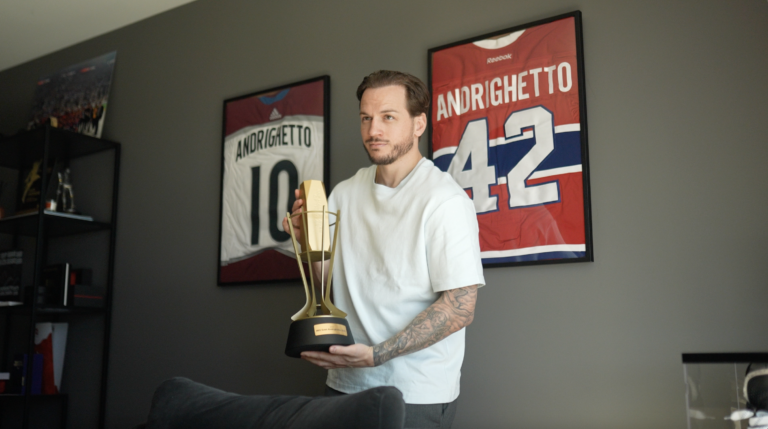





Bryan Johnson invests about two million dollars each year to slow his biological aging. Annie Nosh spends much less – just in the low five figures – and holds the #2 spot on the same leaderboard where Johnson is #1. David Sinclair is the scientist whose research shapes the field. David Beckham rarely discusses longevity, but his dedication over the past thirty years is obvious.
These four people follow four different protocols at very different price points. At first glance, they seem to have little in common. In reality, they share more similarities than you might think.
Most articles simply list what these people take. Here, we ask a more helpful question: when you compare a $2 million Longevity Stack and protocol to a $20,000 one, what remains the same?
In this article

The four archetypes and their longevity stacks
Each of these four made their name in a different part of the longevity world. Sinclair is a scientist. Johnson is a tech entrepreneur who made himself a public experiment. Beckham is a former elite athlete who quietly embraced wellness. Nosh started with no platform, funding, or publicity, yet achieved results that outpace many well-funded protocols.
When four people with very different backgrounds choose the same compounds, it’s something worth noticing.
David Sinclair’s – the scientist
David Sinclair is a professor of genetics at Harvard Medical School and one of the most cited researchers in the aging field. His book Lifespan: Why We Age and Why We Don’t Have To turned NAD+ from a niche biochemistry topic into a consumer category. His lab’s work on sirtuins is the reason most NMN supplements exist.
His publicly disclosed stack centres on NAD+ and sirtuin activation: NMN in the morning, resveratrol mixed with yogurt for absorption, vitamin D, omega-3, and CoQ10. On AMPK pathway support, he has discussed cycling between metformin (a prescription drug for type 2 diabetes) and berberine (an over-the-counter plant compound that activates the same pathway), and in recent interviews has said he leans more toward berberine for tolerability.
NAD+ is a coenzyme that mitochondria need to convert nutrients into usable energy, and sirtuins, the enzymes involved in cellular repair, depend on it to function. NAD+ also gets consumed by enzymes like CD38 that become more active over time. NMN is the most direct precursor cells use to make NAD+. AVEA’s RENEW study conducted with PRUVN™ Research in California, measured a 44% increase in intracellular NAD+ in adults averaging 52 years old, after 60 days on 500mg of NMN plus the Booster. Resveratrol and pterostilbene activate sirtuins through a separate pathway, giving the system both the precursor and the activation signal.
Sinclair’s influence goes beyond his personal supplement stack – his research is the reason this article exists. NMN, resveratrol, and pterostilbene form the base of almost every trusted NAD+ protocol available, including AVEA’s NMN (500mg of Longevir™ per capsule, ≥99% purity, Swiss-tested) and AVEA’s Booster, which combines resveratrol, pterostilbene, CoQ10, apigenin, and betaine.
For more, see our guide to the supplements David Sinclair takes and the RENEW study findings on rebuilding NAD+ in humans.
Bryan Johnson – the maximalist
Bryan Johnson sold Braintree to PayPal for $800 million, founded the brain-computer interface company Kernel, and turned his own biology into the most expensive longevity experiment in history. His Blueprint protocol runs on roughly two million dollars a year and a full-time team of doctors. He calls himself the most measured man in human history. The claim is hard to argue with.
His daily supplement stack alone runs to more than sixty items. Headline ingredients: NMN and NR for NAD+, glycine and collagen peptides for connective tissue, taurine, vitamin D, vitamin K2, CoQ10, omega-3, lithium at trace doses, and a long list of plant extracts. On top sits the experimental layer he has publicly tried: total plasma exchange, gene therapy, and rapamycin (which he discontinued in 2024 after five years, citing side effects).
If you remove the experimental treatments, Johnson’s daily routine is built on NAD+ precursors, support for connective tissue, essential vitamins, and third-party tested ingredients at effective doses. The two million dollars pays for advanced testing, personalized adjustments, and experimental options, but the core stack is not fundamentally different.
This is important because Annie Nosh, who is ranked #2 on the same Rejuvenation Olympics leaderboard, spends only about 1% of what Johnson does. The comparison shows that the foundation does most of the work. The expensive extras add a smaller marginal benefit than the price gap suggests.
For the consumer version of Blueprint’s (Bryan Johnson’s protocol) foundational layer, AVEA’s Vitality Bundle covers the NAD+ side, and the Collagen Activator covers the connective tissue side – both third-party tested, dosed at the levels the underlying research used. The full Blueprint protocol is covered in our Bryan Johnson guide.
David Beckham – the lifestyle athlete
David Beckham represents a different archetype: the elite athlete who has aged in public, then went further. After two decades at the top of professional football, he co-founded his own longevity supplement brand in 2024, putting his name on the category in the same way Sinclair and Johnson have.
What’s on the record: a long career across Manchester United, Real Madrid, LA Galaxy, AC Milan, and Paris Saint-Germain. A daily training routine that hasn’t stopped since retirement. Public investment in cold exposure and recovery technology, including a personal sauna and ice bath setup and a partnership with Therabody as their global wellness advisor. Visible focus on training consistency, sleep, and recovery. We won’t guess at a supplement stack Beckham hasn’t shared. Many articles do, but we prefer to focus on the routines and habits he actually follows.
Those recovery habits aren’t aesthetic, they’re addressing a specific biological problem: connective tissue. Twenty years of elite football accelerate collagen loss in joints, tendons, and skin, on top of the roughly 1% annual decline that starts in the mid-twenties for everyone. Cold exposure, structured rest, and sleep protection all influence how well the body maintains and rebuilds it.
The same collagen decline that ages a footballer’s joints ages everyone’s skin, tendons, and bone matrix. Skin shows it first because it has the highest collagen turnover rate in the body.
AVEA’s Collagen Activator is built around that mechanism. Rather than supplying animal – derived collagen powder, it uses Colgevity™ – a 3:1:1 ratio of glycine, proline, and hydroxyproline – alongside vitamin C from acerola, calcium AKG, and astaxanthin. These are the building blocks and cofactors collagen synthesis depends on. For more on timelines, see why your collagen supplement requires time to work.
Annie Nosh – the pragmatist
Annie Nosh ranks #2 in the world on the Rejuvenation Olympics leaderboard, which tracks pace of biological aging. She has no documentary crew, no podcast, no supplement line, and no funding. She spends in the low five figures a year – a fraction of what the funded protocols cost.
At one point, her pace-of-aging score dropped to 0.46, meaning she was aging slower than almost anyone else. But she felt worse for it: brain fog, low stress tolerance, rigidity around routines, and a loss of enjoyment in daily life. She stopped aiming for the lowest score. When her score settled around 0.65, her mood, recovery, and mental clarity improved. The lowest biomarker isn’t always the healthiest, a point that many well-funded protocols haven’t addressed.
Her supplement routine is intentionally simple: omega-3, collagen, a multivitamin, vitamin D, CoQ10, and glycine. All are third-party tested. She avoids experimental compounds, peptide stacks, or trendy new ingredients. She’s clear that sticking to the basics, done consistently, works better for her than complicated routines.
Her principles line up the same way. Sleep timing as the highest-ROI lever. Nutrient density over dietary rules. Stress modulation is non-negotiable. Movement that’s daily and resistance-based rather than extreme.
What she demonstrates is that a well-designed, affordable supplement routine can compete with much more expensive protocols when it comes to reversing biological age. No $2 million budget required, just the basics, used consistently, and verified by third-party testing.
Her stack overlaps closely withAVEA’s range. For Collagen and the cofactors collagen synthesis depends on: Collagen Activator. For CoQ10, alongside the rest of the NAD+ cofactor stack: Booster. She doesn’t take AVEA, as far as we know – but she independently arrived at almost exactly the formulation logic AVEA was built on.
Source: New Zapiens, Annie Nosh: The Woman Quietly Dominating Longevity’s Leaderboard, January 2026.
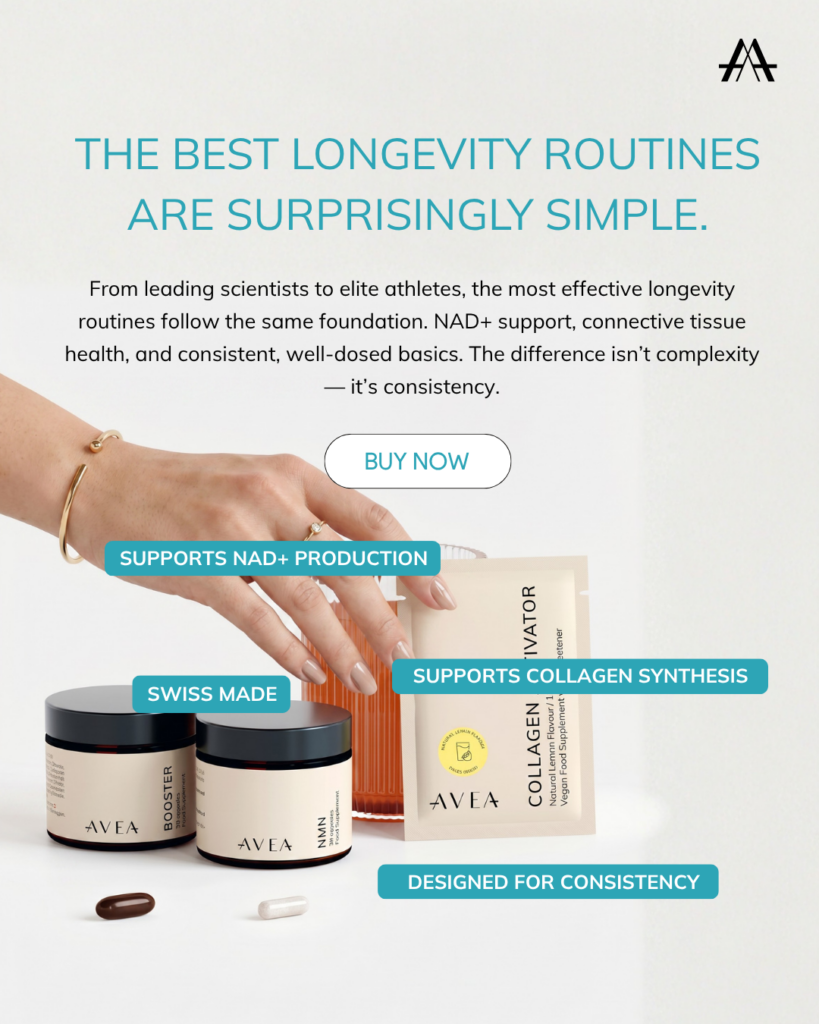
Longevity Stacks: What four very different protocols actually agree on
If you compare all four supplement routines, the differences stand out at first. But the real value is in what they have in common.
- NAD+ and mitochondrial energy support. Sinclair takes NMN and CoQ10. Johnson takes NMN, NR, and CoQ10. Nosh takes CoQ10. Beckham’s brand combines NMN with CoQ10 and resveratrol. Across radically different budgets, all four protocols prioritise the same energy-metabolism layer.
- Connective tissue support. Beckham’s recovery habits point to it. Nosh takes collagen explicitly. Johnson takes collagen peptides and glycine daily. Sinclair takes around 5g of glycine for the same reason. The mechanism – collagen synthesis declining roughly 1% per year from the mid-twenties – applies to all four.
- Third-party tested over experimental. Nosh is explicit. Johnson’s foundational layer meets it. Sinclair uses clinical-grade ingredients. The expensive protocols don’t skip the basics; they add to them.
- Sleep and stress as non-negotiables. All four. Nosh names sleep timing as her highest-ROI lever. Johnson schedules his life around it. Beckham’s career depended on it.
- Mechanism over hype. None of these four chase compounds because they’re trending. They reach for what has a clear biological reason to work, and stay with it long enough to measure something.
The differences between these protocols – like cost, experimental treatments, or public attention – are just distractions. What they share is what really matters.
If you’re starting your own supplement routine, focus on what these protocols have in common. Use the basics, make sure they’re properly dosed and verified, and take them consistently. Anything extra is just fine-tuning – the foundation is what really makes the difference.
For more on which supplements actually have meaningful evidence behind them, see what supplements really do for your health.
The AVEA stack, mapped to these protocols
Here’s how AVEA’s range maps to each layer of the overlap.
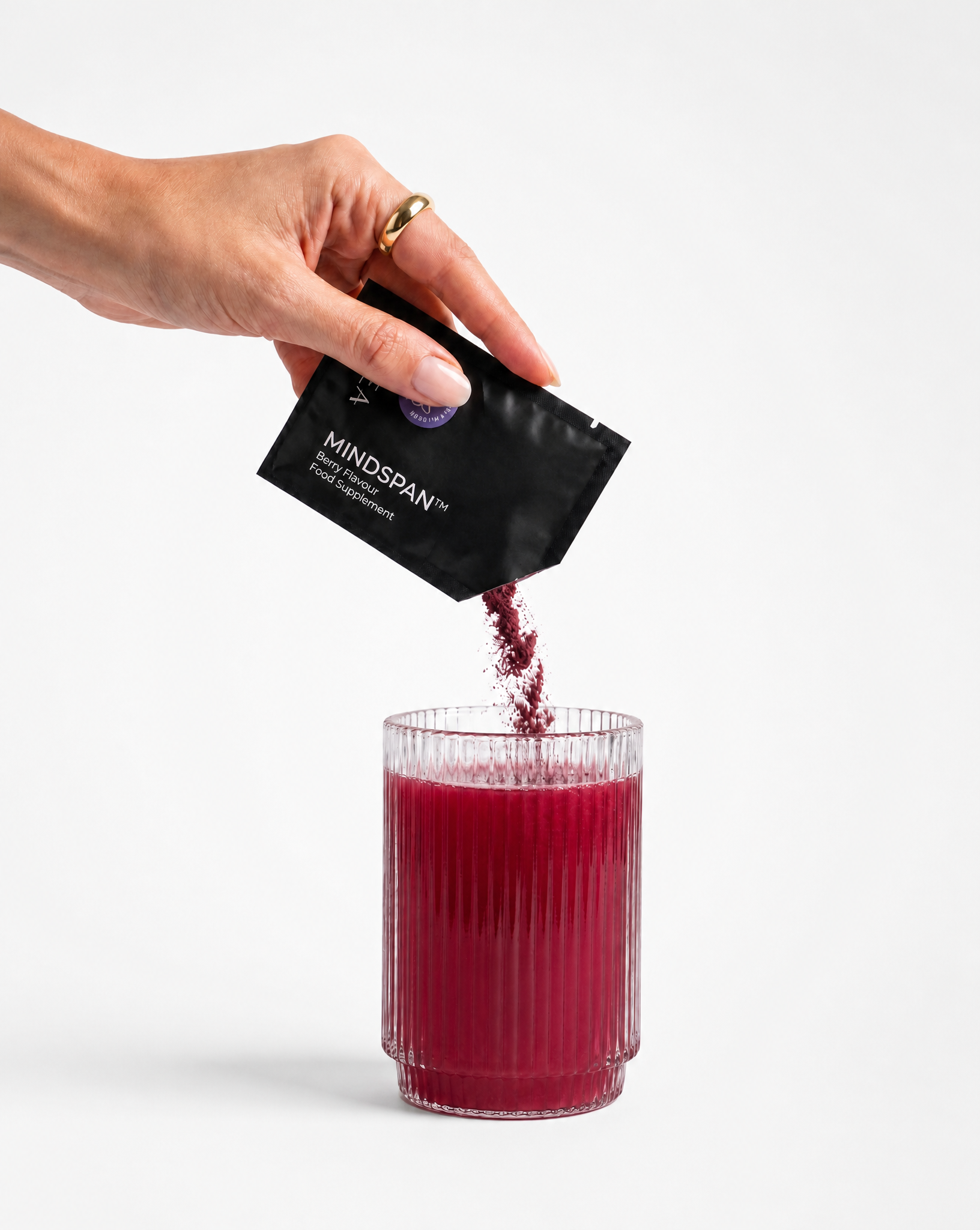
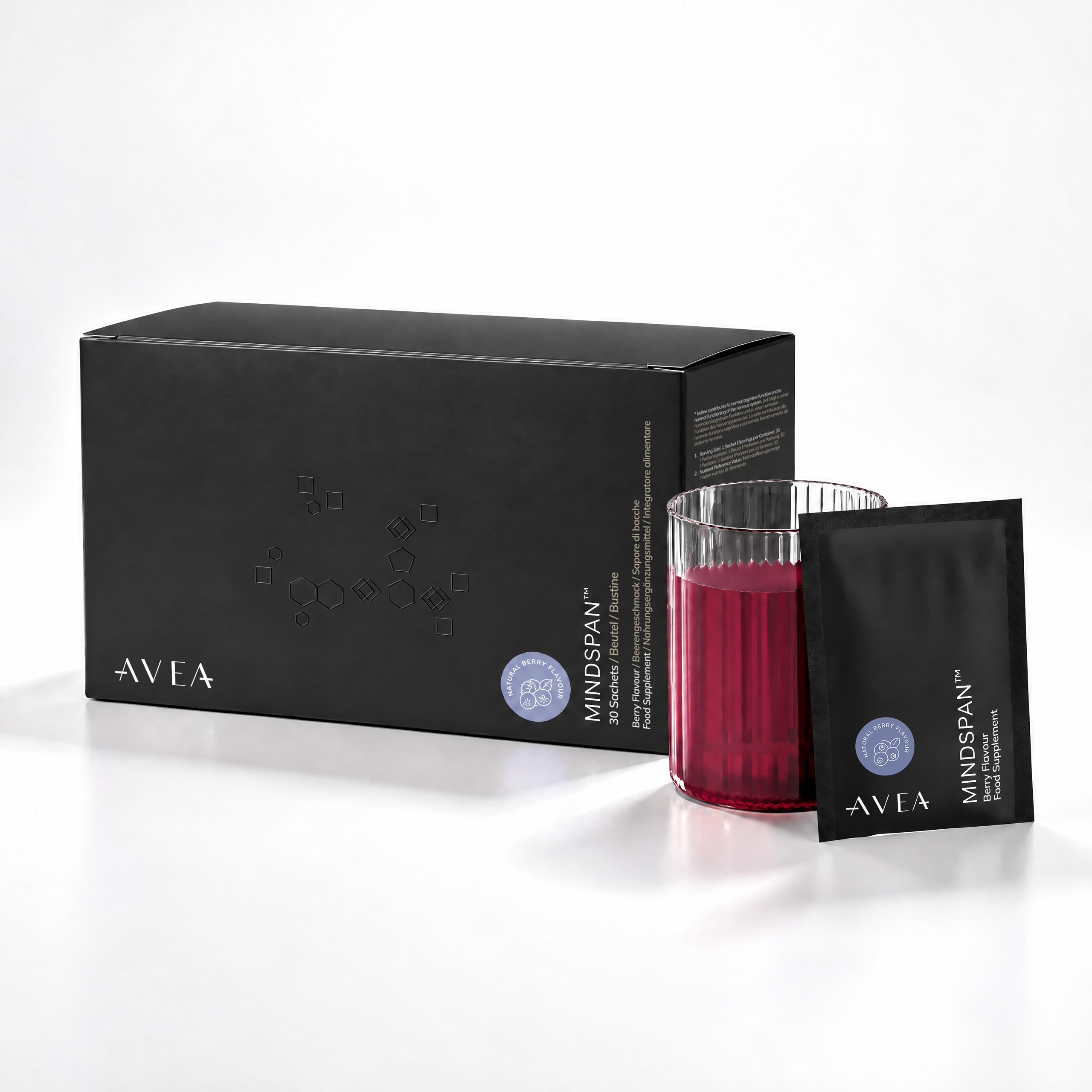
NAD+ precursors – the Sinclair and Johnson layer. AVEA’s Vitality Bundle pairs NMN (500mg of Longevir™ per capsule, ≥99% purity, Swiss-tested) with the Booster (resveratrol, pterostilbene, CoQ10, apigenin, betaine). Same NAD+ and sirtuin pathways both Sinclair and Johnson build their daily routines around – at consumer price points, in clinically meaningful doses.
Connective tissue – the Beckham and Nosh layer. The Collagen Activator uses Colgevity™ (3:1:1 glycine, proline, hydroxyproline) alongside vitamin C from acerola, calcium AKG, and astaxanthin. Rather than supplying collagen powder for the body to break down, it provides the cofactors collagen synthesis actually depends on.
Full coverage. The Complete Rejuvenation Routine combines NMN, Booster, and Collagen Activator – the closest thing in AVEA’s range to a single answer for the convergence points across all four protocols.
What separates AVEA from generic supplement brands is the same set of criteria these four people apply to their own stacks: third-party testing, ingredients dosed at the levels the underlying research used, formulation built around mechanism rather than marketing. Swiss-made, with a published clinical trial behind the Collagen Activator (Dakhovnik, Mantovani et al., npj Aging, 2025) and the RENEW study supporting NMN + Booster.
You don’t need a $2 million budget to build an effective supplement routine. What matters is using the right basics, in the right amounts, and sticking with them.
Closing
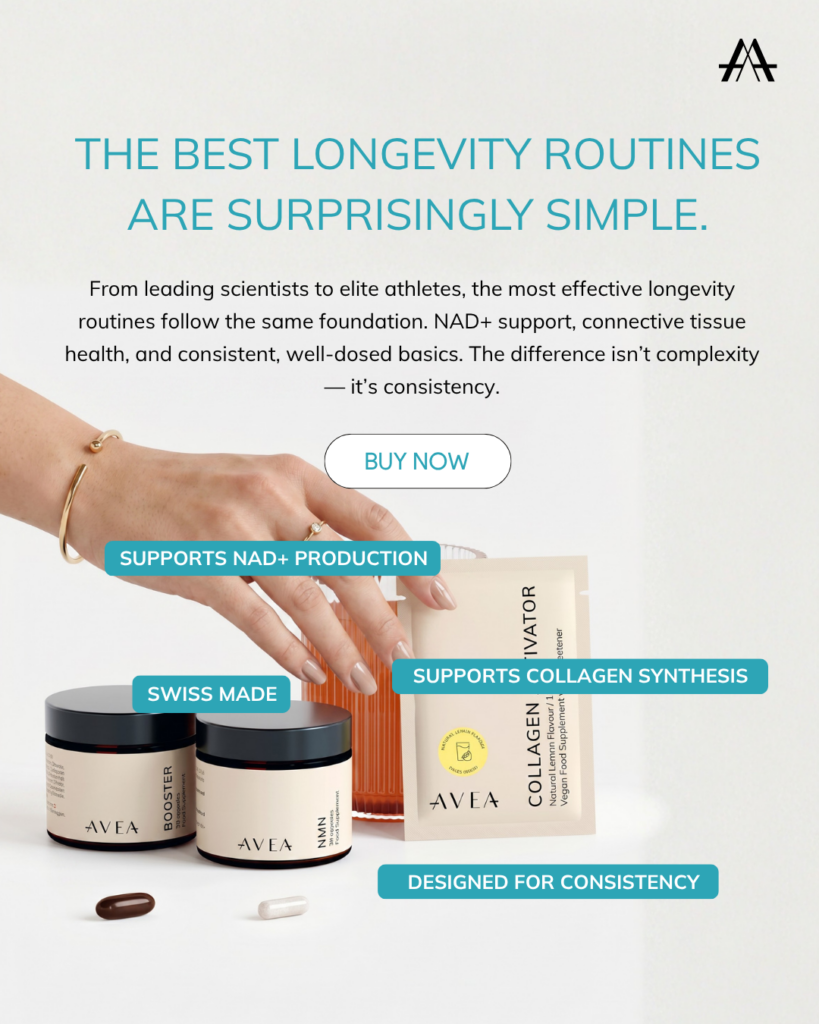
There are four different protocols and four different budgets, but only a small set of shared practices stands out after comparing them all.
That’s the real takeaway from looking at Sinclair, Johnson, Beckham, and Nosh – not their differences, but what they all keep doing when you remove the distractions: NAD+ support, connective tissue support, mitochondrial energy support, reliable basics, and a focus on sleep and stress every day.
If you’re starting from scratch, the Vitality Bundle is the most direct entry point. Build on the overlaps and stay consistent to get the best results.
Frequently asked questions
What supplements does David Sinclair take?
Sinclair has publicly disclosed a stack centred on NAD+ and sirtuin activation: NMN in the morning, resveratrol mixed with yogurt for absorption, vitamin D, omega-3, glycine, and CoQ10. On AMPK pathway support, he has discussed cycling between metformin (a prescription drug for type 2 diabetes) and berberine (an over-the-counter plant compound that activates the same pathway), and in recent interviews has said he leans more toward berberine for tolerability. The NMN and resveratrol elements are the most discussed because they’re the part of the stack his own research underpins. For a fuller breakdown, see our guide to the supplements David Sinclair takes.
What’s actually in Bryan Johnson’s Blueprint stack?
More than sixty items daily. Headline ingredients: NMN and NR for NAD+, glycine and collagen peptides for connective tissue, taurine, vitamin D, vitamin K2, CoQ10, omega-3, trace lithium, and plant extracts. On top sits the experimental layer he has publicly tried: total plasma exchange, gene therapy, and rapamycin (which he discontinued in 2024 after five years, citing side effects). Stripped of the experimental layer, the foundational stack is closer to Sinclair’s and Nosh’s than the price tag suggests. Full protocol in our Bryan Johnson Blueprint guide.
Who is Annie Nosh and why is she ranked #2 on the Rejuvenation Olympics?
Annie Nosh is an independent longevity practitioner who reached #2 on the Rejuvenation Olympics leaderboard – which tracks pace of biological aging – without a research lab, a funded protocol, or a public platform. Her annual spend sits in the low five figures. Her foundational stack is omega-3, collagen, multivitamin, vitamin D, CoQ10, and glycine, all third-party tested. She’s been explicit that the fundamentals, applied consistently, outperform complexity in her own data.
Do you need to spend $2 million a year on longevity to see results?
No. The most useful comparison in the field is Bryan Johnson and Annie Nosh sitting at #1 and #2 on the same leaderboard, with Nosh spending roughly 1% of what Johnson does. The well-funded protocols add an experimental layer on top of a foundational stack – but the foundational stack is what overlaps across every credible longevity figure, regardless of budget.
What do Sinclair, Johnson, Beckham, and Nosh have in common in their stacks?
At the molecular level, glycine and CoQ10 appear in all four stacks. NMN or NR appears in three of four. Resveratrol or pterostilbene appears in three of four. Vitamin D and omega-3 appear universally. Behaviourally, all four prioritise sleep, stress modulation, and third-party tested supplements over experimental compounds. The differences between their protocols are mostly noise. The overlaps are the signal.
What’s the best longevity supplement stack to start with?
The most defensible starting point is the layer all four share: NAD+ support and connective tissue support, on third-party tested supplements, dosed at the levels the underlying research used. AVEA’s Vitality Bundle covers the NAD+ side and the Collagen Activator covers the connective tissue side.