




You’re fine one minute and snapping at your partner the next. A small thing makes you cry, or you feel irritable for no clear reason. Afterwards you wonder, “Is this really me?”

If you’re in your 40s or 50s and this sounds familiar, you’re not imagining it, and you’re definitely not alone. Mood swings are one of the most common yet least talked about changes of perimenopause and menopause. When AVEA surveyed 404 women about what they most wanted to improve, mood swings came up as one of their top concerns, alongside fatigue and brain fog.
The good news about Menopause mood swings: there’s a clear reason this happens, and there’s a lot you can do about it.
In this article
What are menopause mood swings?
Menopause mood swings are sudden, sometimes strong changes in how you feel, which happen as your hormones change in midlife. You might go from calm to irritated, or from content to teary, very quickly, often over things that wouldn’t have bothered you before.
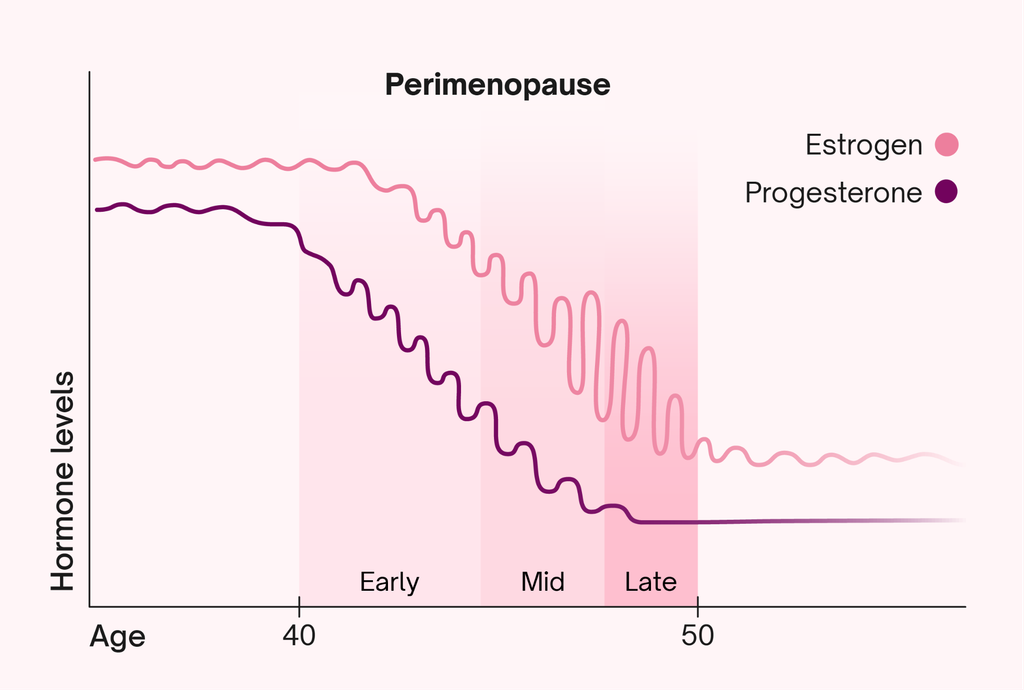
They usually begin in perimenopause, the years before your periods stop completely. For most women that starts in the early-to-mid 40s, though it can begin in the late 30s. The average age of menopause is around 51, so this phase can last several years.
This matters because many women don’t connect their mood changes to menopause at all. Their periods may still be coming, their blood tests may look “normal”, and so they assume it’s stress, their personality, or something they should just push through.
Signs your mood swings may be linked to menopause
Everyone’s experience is different, but women often describe:
- Feeling irritable or short-tempered, especially with the people closest to you
- Getting tearful more easily than usual
- Feeling overwhelmed by things you used to handle easily
- Low mood that comes and goes
- Feeling “flat” or not quite like yourself
- Mood changes that come with other new changes, such as tiredness, brain fog, poorer sleep, hot flushes or irregular periods
If several of these started in your late 30s, 40s or early 50s, hormonal changes may well be part of the picture.
Why do mood swings happen during menopause?
1. Your hormones go up and down, not just down
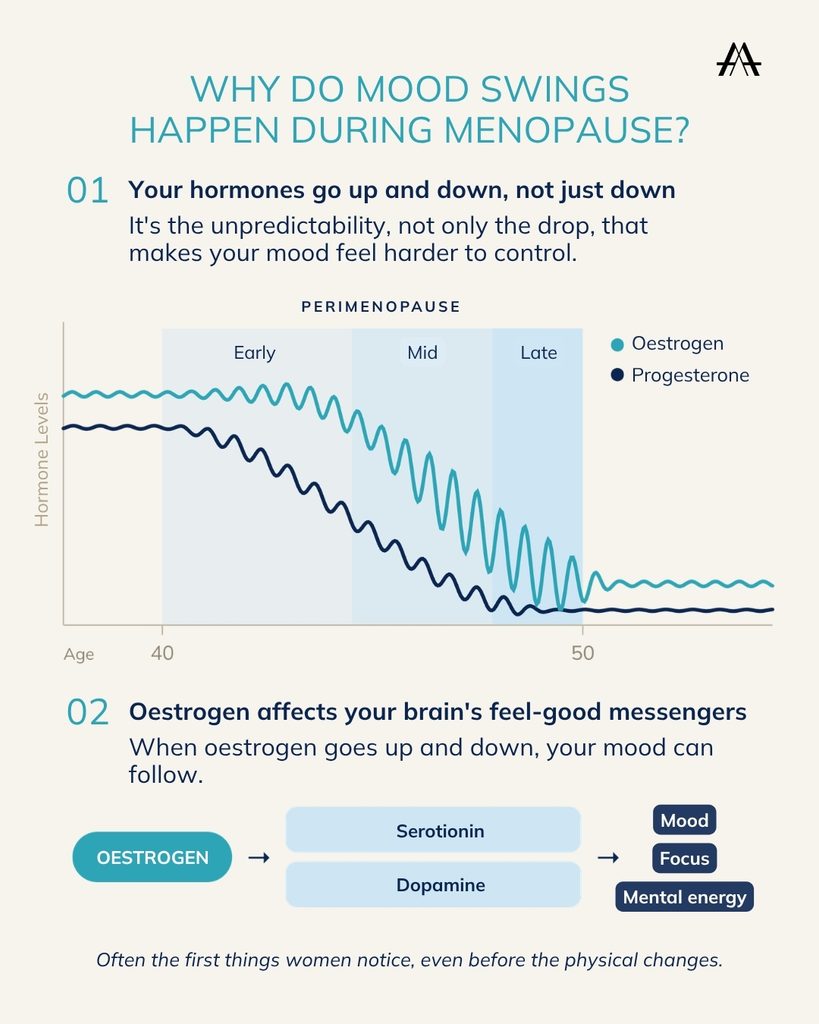
Many people think menopause simply means hormones “run out”. In reality, perimenopause is more like a rollercoaster. Your ovaries slowly make less oestrogen and progesterone, but on the way there your levels can swing up and down from week to week, even from day to day.
Think of it like a radio signal that keeps cutting in and out. It’s the unpredictability, not only the drop, that makes your mood feel harder to control.
2. Oestrogen affects your brain’s “feel-good” messengers
Oestrogen doesn’t only affect your periods. Your brain is full of places where oestrogen has an effect, and it helps influence brain messengers such as serotonin and dopamine, which play a big part in how balanced, calm and positive you feel.
So when oestrogen goes up and down, your mood can follow. This is why mood, focus and mental energy are often the first things women notice, even before the physical changes.
3. Poor sleep makes everything feel harder
Up to 60% of women have sleep problems during perimenopause and menopause, often for the first time in their lives. Night sweats, waking at 3am and lying awake with a busy mind are all common.
There are a few reasons for this:
- Falling hormones. Progesterone converts in the body to allopregnanolone, which acts on the same receptors as prescription sleeping tablets. As progesterone drops, you lose a natural sedative you have had since puberty. Oestrogen, meanwhile, helps regulate body temperature and serotonin, both of which feed into how easily you settle.
- Stress hormones at the wrong time. Cortisol is meant to bottom out around midnight and climb again in the hours before you wake. In midlife that curve tends to flatten: it stays higher in the evening when it should be falling, and starts climbing earlier in the night. Oestrogen normally dampens the stress response, so as it drops you react more strongly to the same pressures. This is part of why 3am is such a common waking time. The rise is already underway, and if your sleep is light it takes very little to tip you into being awake. Then the thinking starts.
- Temperature swings. Night sweats and hot flushes wake you repeatedly. Worth knowing: sleep problems often carry on long after the flushes have stopped, so treating the flushes alone rarely fixes the sleep.
- Less melatonin. Your body’s production of melatonin starts dropping in your forties. By middle age the nightly rise is around 60% of what it was in your twenties, and it keeps falling from 60 onwards.
After a bad night, anyone is more likely to feel short-tempered and emotional. Over weeks, poor sleep and mood swings feed each other: you sleep badly, so you feel worse, and feeling worse makes it harder to sleep.
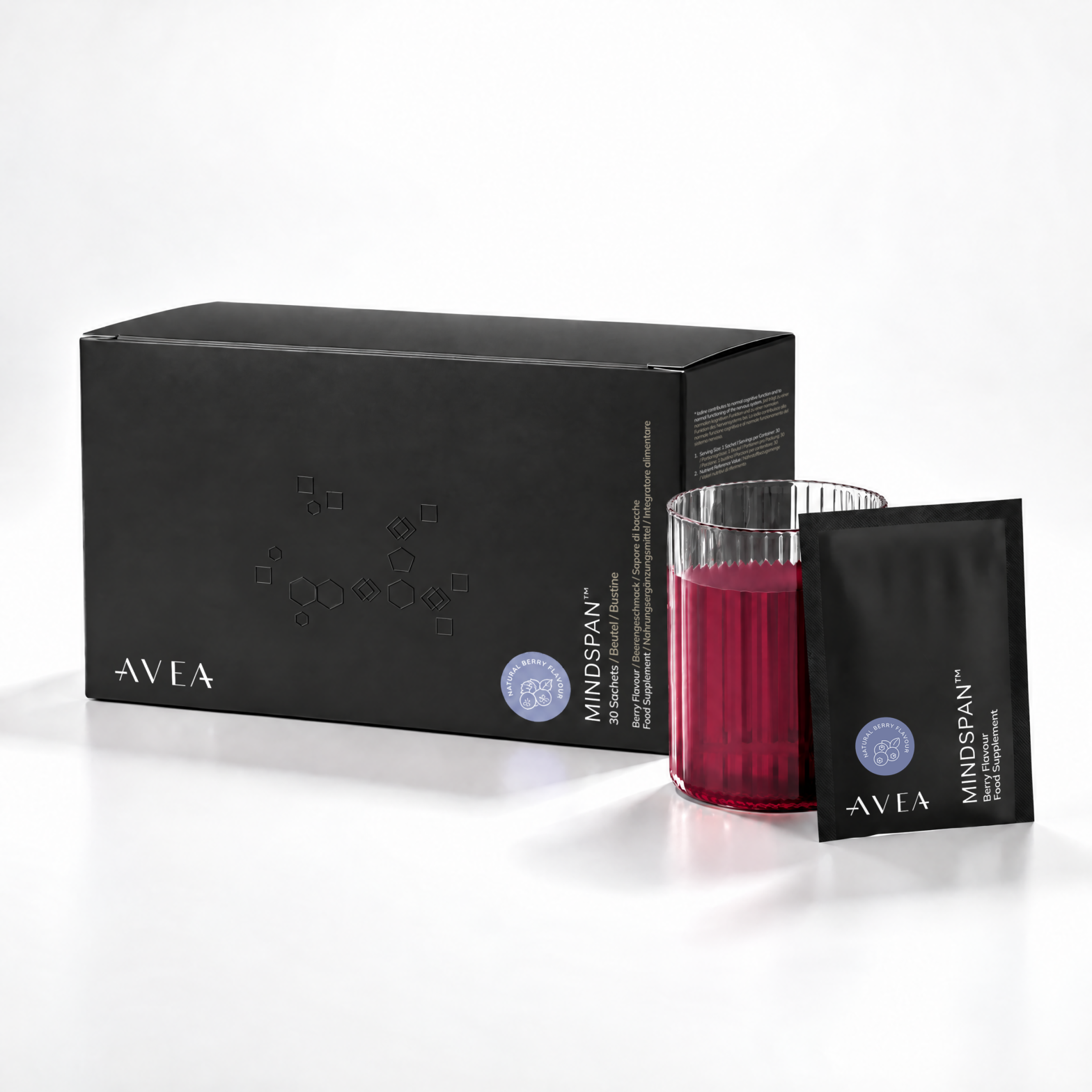
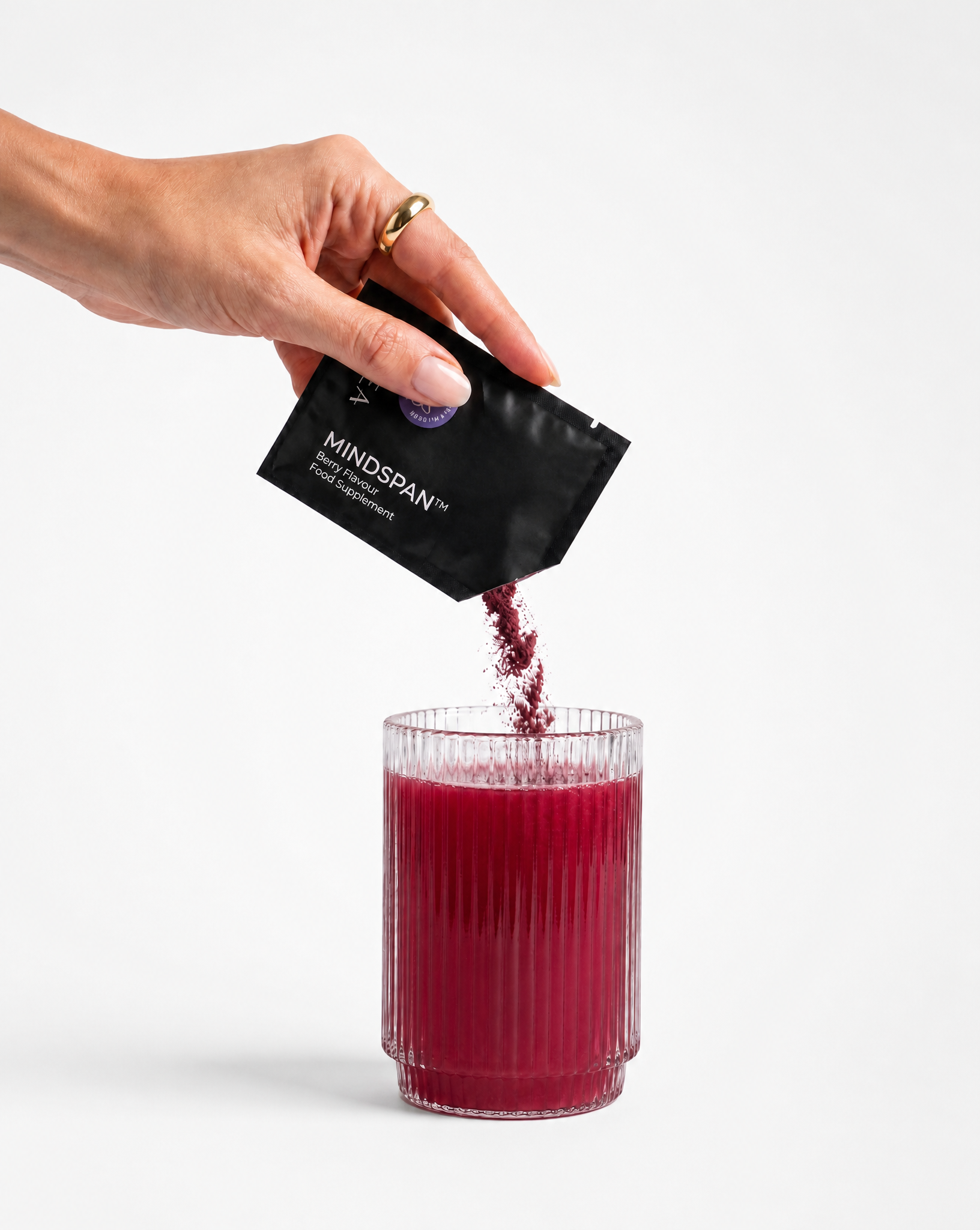
If sleep is where your mood swings start, AVEA Sereniser can help. AVEA Sereniser is our evening supplement for calm, restful nights. It combines saffron extract (Safr’Inside™), holy basil (Holixer™), a ginger and frankincense blend (Serezin™), L-theanine from green tea, magnesium bisglycinate and vitamin B6. It’s designed to help you:
- Fall asleep faster, feeling calm and relaxed
- Sleep deeper for longer, with more restful nights
- Wake up refreshed, without grogginess
AVEA Sereniser contains no melatonin and isn’t a sedative. Instead, it supports your body’s own wind-down routine. In clinical research on its ingredients, 93% of people reported better overall sleep quality. Take 2 capsules 1–2 hours before bed.
Tip: Many women pair MenoSpan in the morning for mood, mental clarity and everyday energy with AVEA Sereniser in the evening for calmer nights. It’s round-the-clock, hormone-free support.

4. Tiredness and brain fog feed into it
When you feel drained and can’t think clearly, small everyday stresses feel much bigger. Mood, mental clarity and energy are closely connected, so when one slips, the others often follow.
5. Midlife is already a busy time
Many women go through perimenopause while juggling careers, teenagers, ageing parents and relationships, all at once. Hormonal changes on top of a full life can make it feel like you have less emotional “room” than before.
In short: menopause mood swings aren’t a weakness or a character flaw. They’re a natural response to real changes happening in your body.
What helps with menopause mood swings?
There’s no single magic fix, but small, steady habits really do add up. Here’s where to start:
- Protect your sleep. Keep a regular bedtime, keep your bedroom cool, and limit screens before bed. Better sleep is one of the quickest ways to feel more emotionally steady.
- Move your body. Walking, strength training, yoga or dancing all help lift your mood and energy. Aim for something most days, even 20–30 minutes.
- Eat regularly. Skipping meals can lead to energy dips that make irritability worse. Build meals around protein, vegetables, whole grains and healthy fats.
- Watch alcohol and caffeine. Both can disturb sleep and make mood swings and hot flushes feel worse. Try cutting back for a few weeks and see how you feel.
- Build in “pressure release” moments. A short walk outside, breathing exercises or a few quiet minutes in the day can help you reset before things build up.
- Talk about it. Tell your partner, friends or colleagues what’s going on. Just knowing why you feel this way can take a lot of the guilt and confusion away.
- Track your symptoms. Note your mood, sleep and energy for a few weeks. It helps you spot patterns and makes it much easier to talk to your doctor.
- Know your options. Some women choose hormone therapy (HRT) with their doctor, and many others can’t or prefer not to take hormones. Both are valid choices. The best choice is an informed one, made together with your doctor.
Can supplements help with menopause mood swings?
Supplements aren’t a replacement for sleep, movement and good food, but the right one can give you extra daily support alongside those habits.
Many menopause supplements focus on one symptom, such as hot flushes. Others try to copy the effect of hormones using plant hormones (phytoestrogens). But many women tell us their biggest struggles are the “invisible” ones: mood, mental clarity and energy. These are also the ones that are most often overlooked.
That’s the gap AVEA set out to fill.
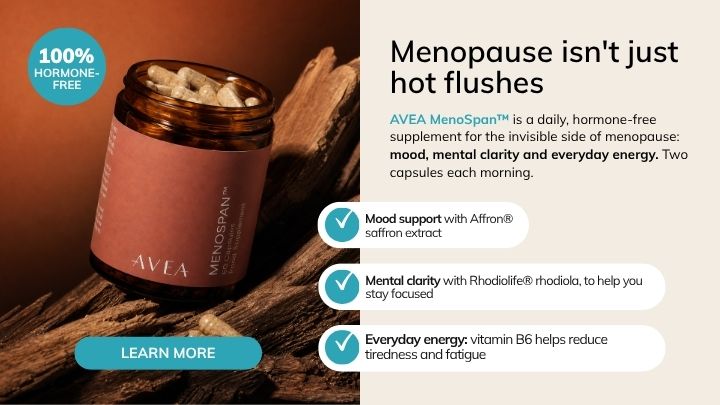
Meet AVEA MenoSpan: feel like yourself again
Imagine waking up and feeling like you again: calm instead of on edge, clear-headed instead of foggy, with enough energy to enjoy your day rather than just get through it.
That’s exactly why AVEA created MenoSpan.
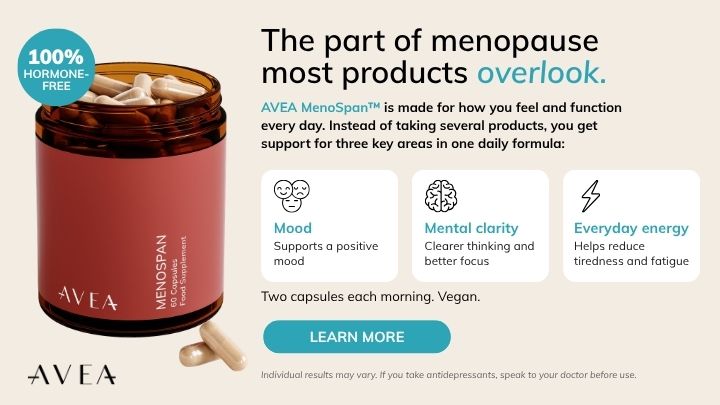
MenoSpan is the daily, hormone-free supplement made for the “invisible” side of menopause:
- Positive mood: fewer highs and lows, more feeling like yourself
- Mental clarity: think clearly and stay focused through the day
- Everyday energy: help to reduce tiredness and fatigue
- Hormone-free: no hormones and no phytoestrogens, so it suits women who can’t or would rather not take hormones
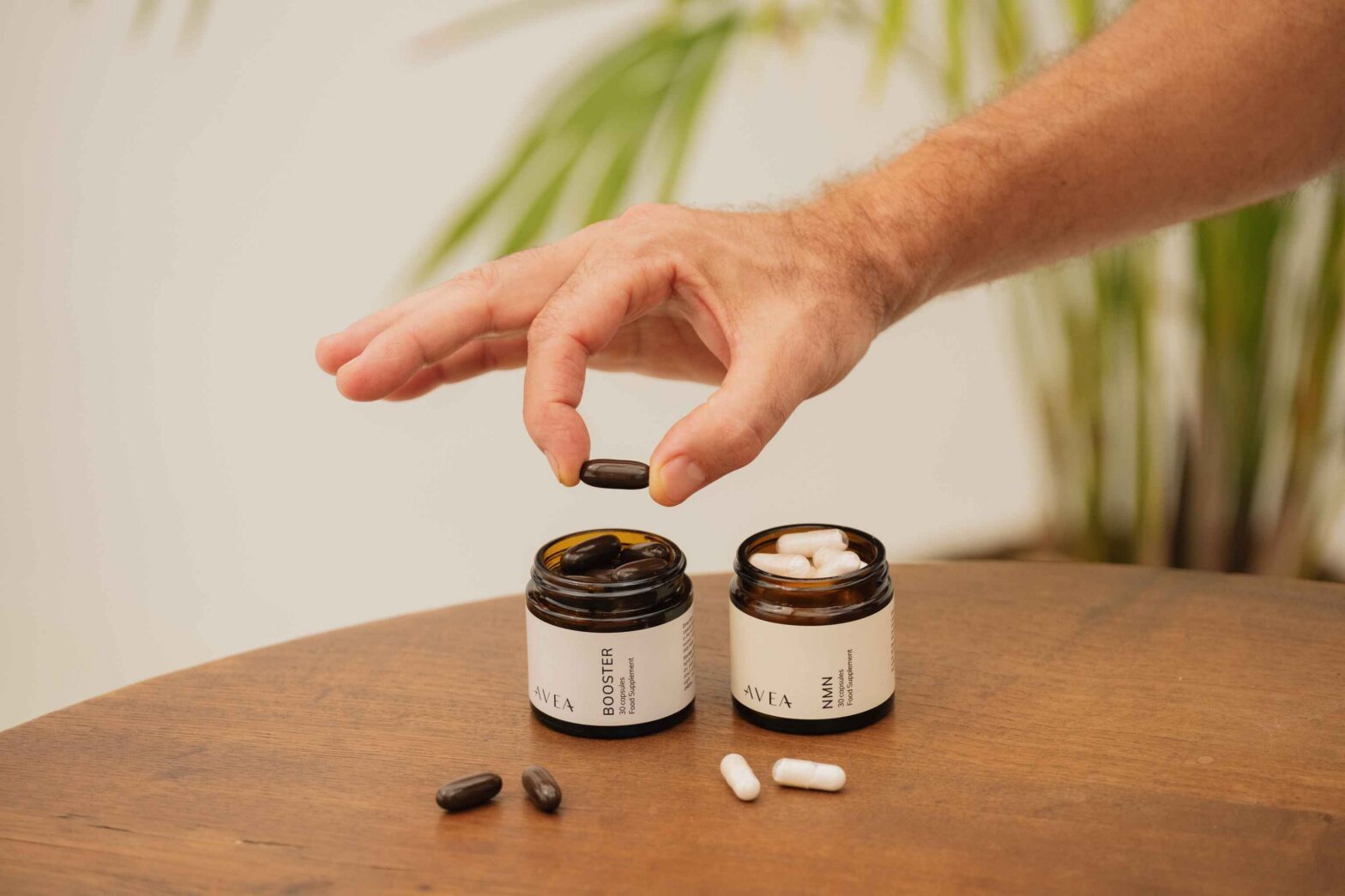
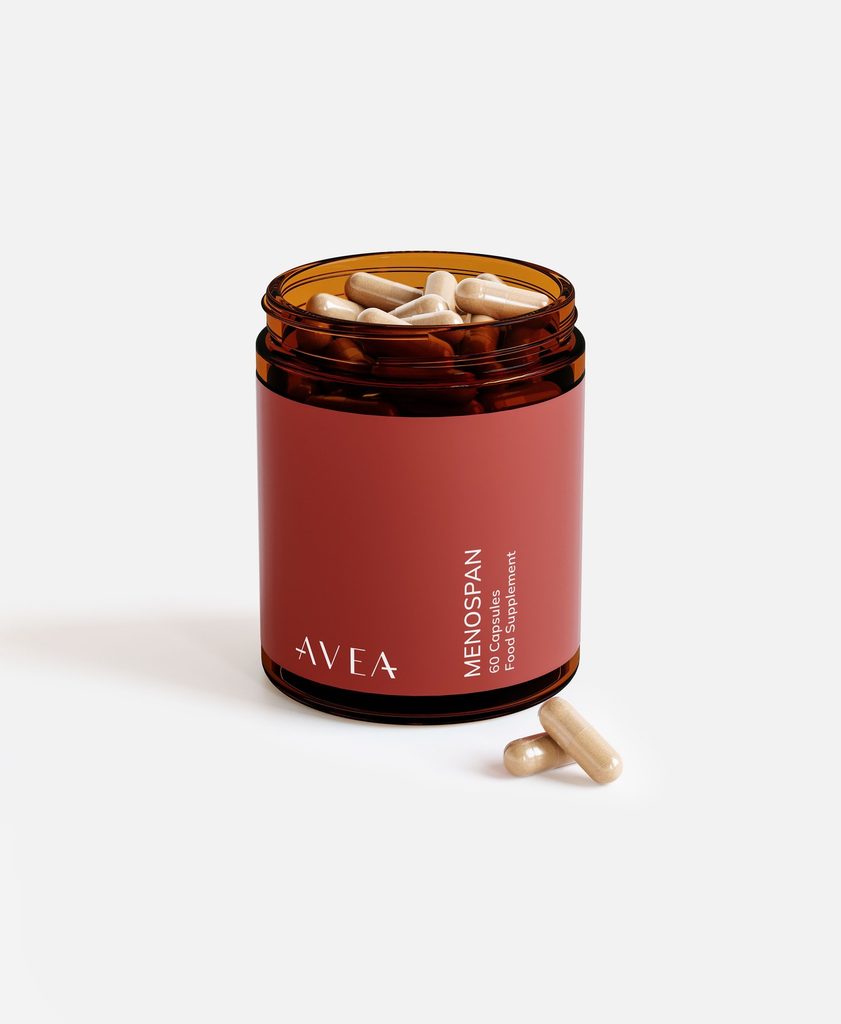
One formula. Two capsules each morning. No need to juggle several products for different symptoms.
What’s inside AVEA MenoSpan?
Four clinically studied ingredients, each chosen for a clear job:
Affron® saffron extract (28 mg): the mood ingredient
One of the most researched saffron extracts in the world, backed by 11 published clinical studies. In a 12-week placebo-controlled study of 86 perimenopausal women, 28 mg a day (the same amount as in AVEA MenoSpan) improved mood and wellbeing compared with placebo.
A branded Botanical Blend of Bergamot Fruit Extract, Lemon Balm Leaves Extract and Peony Roots(475 mg): the menopause foundation
A French plant blend made specifically for menopause. In placebo-controlled studies with more than 300 women before and during menopause, this botanical blendsignificantly improved physical and mental tiredness from the second month. In one study of 153 women, 90% reported a better quality of life after just 2 months, and more than 80% wanted to keep taking it after the study ended.
Rhodiolife® Rhodiola rosea root (100 mg): the mental fatigue shield
A standardised rhodiola extract backed by more than 25 years of research, to help you stay sharp and clear-headed, even on stressful days.
Vitamin B6, active P5P form (1.4 mg, 100% NRV): the everyday essential
Vitamin B6 contributes to normal psychological function, the regulation of hormonal activity and the reduction of tiredness and fatigue.
In simple terms: saffron lifts mood, rhodiola keeps you clear-headed and cuts through mental fatigue, the botanical blend rebuilds physical and mental energy over the first two months, and vitamin B6 supports all three by helping regulate hormonal activity, psychological function and tiredness.
Why women are choosing AVEA MenoSpan
1. It’s built for mood first.
Mood swings, low mood and brain fog aren’t an afterthought in MenoSpan. They’re the whole point. Every ingredient was chosen to support how you feel and think day to day.
2. Clinically studied ingredients, at the doses used in research.
80% of the women we surveyed told us clinically backed ingredients matter most when choosing a supplement. We agree. That’s why MenoSpan uses premium, branded ingredients rather than cheap generic powders, each at the amount used in studies.
3. Nothing hidden, nothing you don’t need.
Every dose is printed on the label, with no “proprietary blends”. MenoSpan is hormone-free, phytoestrogen-free, ashwagandha-free and vegan.
4. Developed in Switzerland.
Formulated and producedin Switzerland, with traceable ingredients from trusted European specialists.
5. Tested on real women, not just on paper.
Many brands only quote studies on individual ingredients. We went further and tested MenoSpan itself.
What can you expect from AVEA MenoSpan?
- After 1 month: Daily support for mood, mental clarity and everyday energy begins to build.
- After 3 months: The point at which women in our study reported significant improvements in mood swings, low mood, brain fog and fatigue.
- 6 months and beyond: Ongoing, hormone-free support as you move through perimenopause and menopause.
*Individual results may vary.
How to choose a menopause supplement
Not all menopause supplements are the same. Here’s what to look for:
1. Does it match your symptoms?
If mood, focus and energy are your main concerns, choose a formula made for those, not one built mainly for hot flushes or weight.
2. Are the ingredients clinically studied, and at the right amount?
Look for named, branded ingredients (like Affron® or Rhodiolife®) and check that the dose matches what was used in studies. A “sprinkle” of a good ingredient won’t do much.
3. Is the label fully transparent?
Avoid “proprietary blends” that hide how much of each ingredient you’re actually getting.
4. Does it contain hormones or plant hormones?
If you prefer to avoid hormones, or your doctor has advised you to, choose a hormone-free option like MenoSpan.
5. Is there real-world evidence?
It’s a good sign when a brand has tested its own finished product, not just quoted ingredient studies.
Make it a routine: pair MenoSpan with the right support
Every woman’s menopause is different, so your routine can be too:
- Foggy and running on empty by noon? Pair MenoSpan + Vitality Bundle for extra everyday energy.
- Wired at midnight, wrecked by morning? Pair MenoSpan in the morning + Sereniser in the evening for calmer nights and brighter days.
FAQs
Are mood swings a sign of perimenopause?
Yes, they’re one of the most common early signs. Because they often start while your periods are still regular, many women don’t realise hormonal changes are behind them.
How long do menopause mood swings last?
For most women, around four years. Mood changes tend to be strongest during perimenopause, which lasts an average of four years and can run anywhere from two to eight. They usually ease once your hormones settle: research following women for a decade either side of their last period found the risk of low mood dropped after the final period and was significantly lower from the second year onwards. Healthy habits and the right support can make this phase considerably easier.
Does MenoSpan contain hormones?
No. MenoSpan is completely hormone-free and contains no phytoestrogens (plant hormones). It doesn’t replace or copy your hormones.
How do I take MenoSpan?
Take 2 capsules daily in the morning, ideally before breakfast. One box contains 60 capsules, which lasts 30 days.
How long until I notice a difference?
Everyone is different. Our study looked at three months of daily use, so we recommend taking MenoSpan consistently for at least three months to see how it works for you.
Can I take MenoSpan alongside HRT?
Yes. HRT works on your hormones, while MenoSpan‘s plant ingredients support mood, mental clarity and energy. None of its ingredients are hormones or plant hormones, so they don’t interfere with your body’s hormones or with HRT. As with any supplement, let your doctor know if you’re on HRT or other medication.
Can I take MenoSpan if I’m on antidepressants?
Not without speaking to your doctor first. Saffron and rhodiola act on serotonin, the same pathway as many antidepressants. Combining them can sometimes be harmful, so this is a decision to make with the doctor who prescribed your medication.
Is MenoSpan vegan?
Yes. MenoSpan comes in vegan capsules and is free from ashwagandha.
References
- Lopresti AL, Smith SJ. (2021). The effects of a saffron extract (affron®) on psychological and physical wellbeing in women experiencing perimenopausal symptoms: a randomised, double-blind, placebo-controlled study. Journal of Menopausal Medicine.
- Darbinyan V, et al. (2000). Rhodiola rosea in stress-induced fatigue: a double-blind cross-over study of a standardized extract SHR-5 with a repeated low-dose regimen on the mental performance of healthy physicians during night duty. Phytomedicine.
- Menobelle® clinical studies: randomised, double-blind, placebo-controlled studies, including a 153-woman trial (300+ pre- and menopausal women in total). [add link]
- European Food Safety Authority (EFSA): authorised health claims for Vitamin B6.
- AVEA customer survey of 404 women.