





Most people know creatine as something gym-goers take to build muscle. But some of the most interesting recent research isn’t about muscle at all. It’s about the brain.
Your brain is one of the most energy-hungry organs in your body, and creatine plays a central role in how brain cells produce and recycle that energy.
So what does Creatine actually do for the brain, and can it help with focus, memory and mental fatigue? Here’s what the science says.
In this article
Creatine: What is it, and why your brain needs it
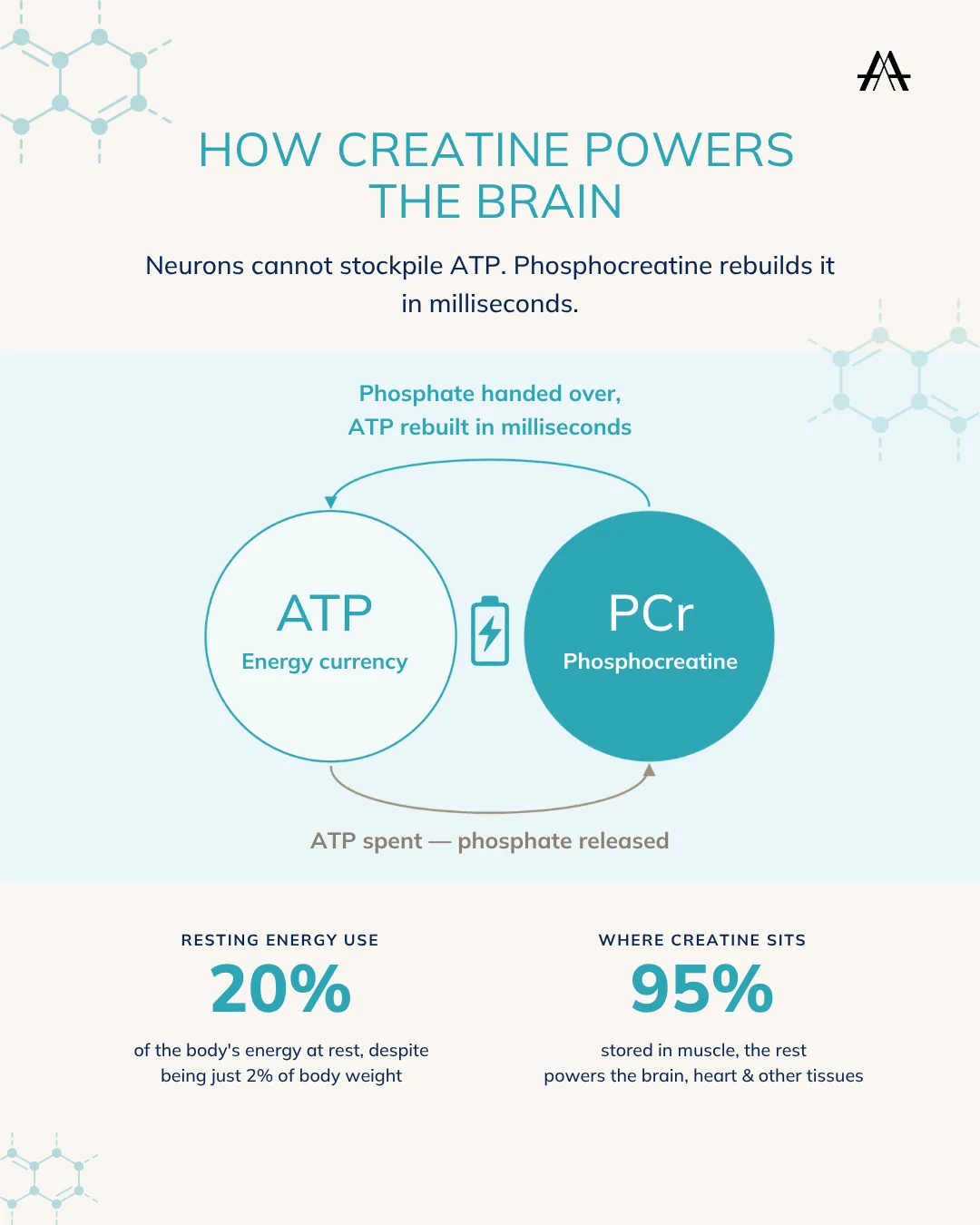
Creatine is a compound your body makes on its own and also gets from foods like meat and fish. Around 95% of it is stored in your muscles, which is why it became a sports supplement in the first place. The rest is spread across the brain, heart and other tissues. The brain’s share is small but not optional: children born unable to make or transport creatine have severe neurological problems from birth.
Although the brain makes up only about 2% of your body weight, it uses roughly 20% of your energy at rest. Every thought, every recalled name, every minute of held attention is paid for in ATP, the molecule cells use to carry and release energy.
The catch is that cells cannot stockpile ATP. They hold seconds’ worth at a time, so they run a recycling system instead. Creatine sits inside the cell bound to a phosphate group, in a form called phosphocreatine. The moment ATP is spent, phosphocreatine hands over its phosphate to rebuild it. The whole transfer takes milliseconds.
It works like a rechargeable battery sitting next to the socket. The faster a neuron restores its ATP, the longer it keeps firing before performance drops off. When that battery is small or slow, you feel it as the particular kind of tiredness where the word you want is right there and will not come.
This matters more with age. Brain cells become less efficient at producing and using energy over time, which is part of why recalling names, staying focused through a long meeting or thinking clearly when tired starts to feel harder than it did.
Signs your brain is running low on energy
Mental performance is not constant, and the dips tend to show up in the same few ways:
- Afternoon fog, or a cotton-wool feeling in the head
- Losing your train of thought mid-sentence
- Reaching for a word you definitely know
- Mental fatigue arriving earlier than it used to
- Needing a second coffee just to feel switched on
None of this is a cause for concern on its own. It usually means the supply and demand of energy in your brain have fallen out of step, which is exactly the gap creatine is studied for.
Who gets the most from creatine
Creatine is one of the few supplements where the research is unusually clear about who it helps.
People who eat little meat or fish. Creatine comes almost entirely from those two foods, and your body only makes about a gram a day on its own. Vegetarians consistently show the largest gains in trials. In one study of 128 young adults, creatine improved memory in the vegetarians and did essentially nothing in the meat-eaters. A separate trial in vegetarians found better working memory and reasoning after six weeks.
Anyone short on sleep. Sleep deprivation is the condition under which creatine’s cognitive effects appear most reliably, with supplemented participants holding their performance while placebo groups drop off.
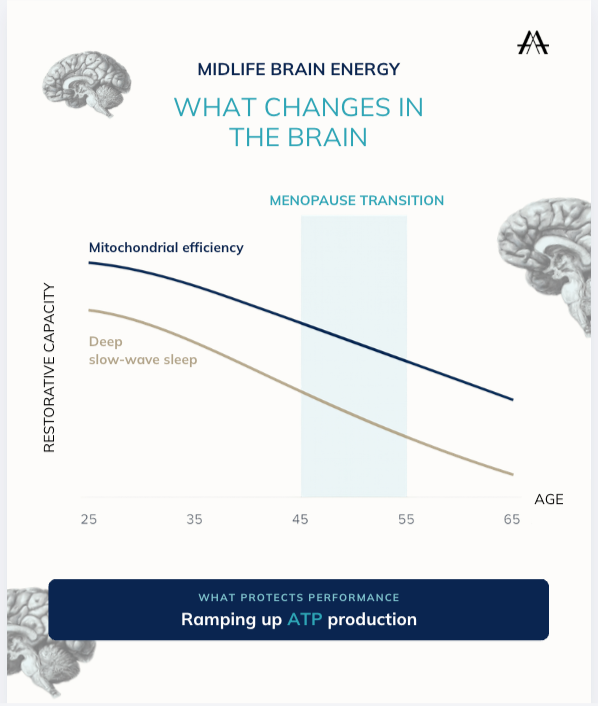
Adults over 40. Two things shift from your late thirties, in everyone. Mitochondria, the structures that produce energy inside every cell, become less efficient, and the brain feels that first. At the same time, deep slow-wave sleep declines steadily, so the recovery your brain gets overnight gets shallower even when the hours on the clock stay the same.
Women. Women carry roughly 70 to 80% less creatine than men, partly through body composition and partly because they eat less meat and fish on average. Imaging studies have also found lower creatine concentrations in women’s frontal lobes, the region handling attention and working memory. Through the menopause transition there is a further shift: oestrogen helps regulate how efficiently neurons burn glucose, and brain scans across the transition show measurable drops in glucose use in the regions handling complex thought.
The common thread is starting position. The further below the ceiling you begin, the more a top-up appears to matter.
What the research shows
Memory is the strongest finding. A 2023 meta-analysis of randomised trials found creatine improved memory, with the benefit concentrated in adults aged 66 to 76. A 2024 meta-analysis across a wider age range also reported gains in attention and processing speed.
Stress and poor sleep amplify the effect. A 2018 review of randomised trials found the clearest results in older adults and in people whose bodies were under strain. In sleep-deprived participants, creatine has helped maintain performance where placebo groups declined.
There is now a trial in menopausal women. In 2025, researchers gave 36 perimenopausal and menopausal women creatine for eight weeks. Reaction times improved and creatine levels in the frontal brain went up, which means it reached the tissue that matters. It is one small trial, but it is the first direct evidence in this group and it points the same way as everything else.
Myths about creatine
“Creatine is a gym supplement.” It became one because muscle holds most of it. But creatine does the same job wherever it sits, and your brain is no exception. The cognitive research has been running for over twenty years.
“You have to load.” A loading phase means roughly 20 g a day for five to seven days. You do not need one. Three to five grams daily reaches the same saturation point in around three to four weeks, and causes far less stomach upset.
“It will make me puffy.” The water-retention worry comes from those high-dose loading protocols in athletes, and the water in question goes into muscle cells, not under the skin. At 3 g a day it is not a meaningful concern, and creatine does not cause fat gain.
“It is hard on your kidneys.” Long-term studies in healthy adults have found no kidney harm at standard doses. Creatine does nudge up blood creatinine, which can look alarming on a routine blood test, so mention that you take it if your doctor flags the result. If you already have kidney disease, ask before starting.
And on getting it from food: you would need to eat around a kilo of raw beef or salmon to reach 3 to 5 g, and cooking destroys some of it. For most people, food alone will not get you there.
How much creatine should you take for the brain?
Cognitive research has generally used 3 to 5 g a day. Timing matters far less than consistency, because you are filling a store rather than taking something that acts within the hour. Take it every day, including days you do not exercise.
Give it three to four weeks. Most people say their afternoon slump arrives later, or stops happening.
Different types of creatine, and why the form matters
We have talked about creatine as though it were one thing. It is sold in several forms, usually with a claim that the newer one absorbs better: hydrochloride, ethyl ester, various buffered versions. The evidence has not really borne that out. Creatine monohydrate is the original, by far the most studied, and still the form every other version is measured against. Nothing has convincingly beaten it.
What does differ, and matters more than most people realise, is how that monohydrate is processed and how much of it you actually get. Three things decide whether a creatine product does anything for you: whether it dissolves, whether the dose matches the research, and what it is blended with.
Why AVEA uses Clonapure® in MindSpan™
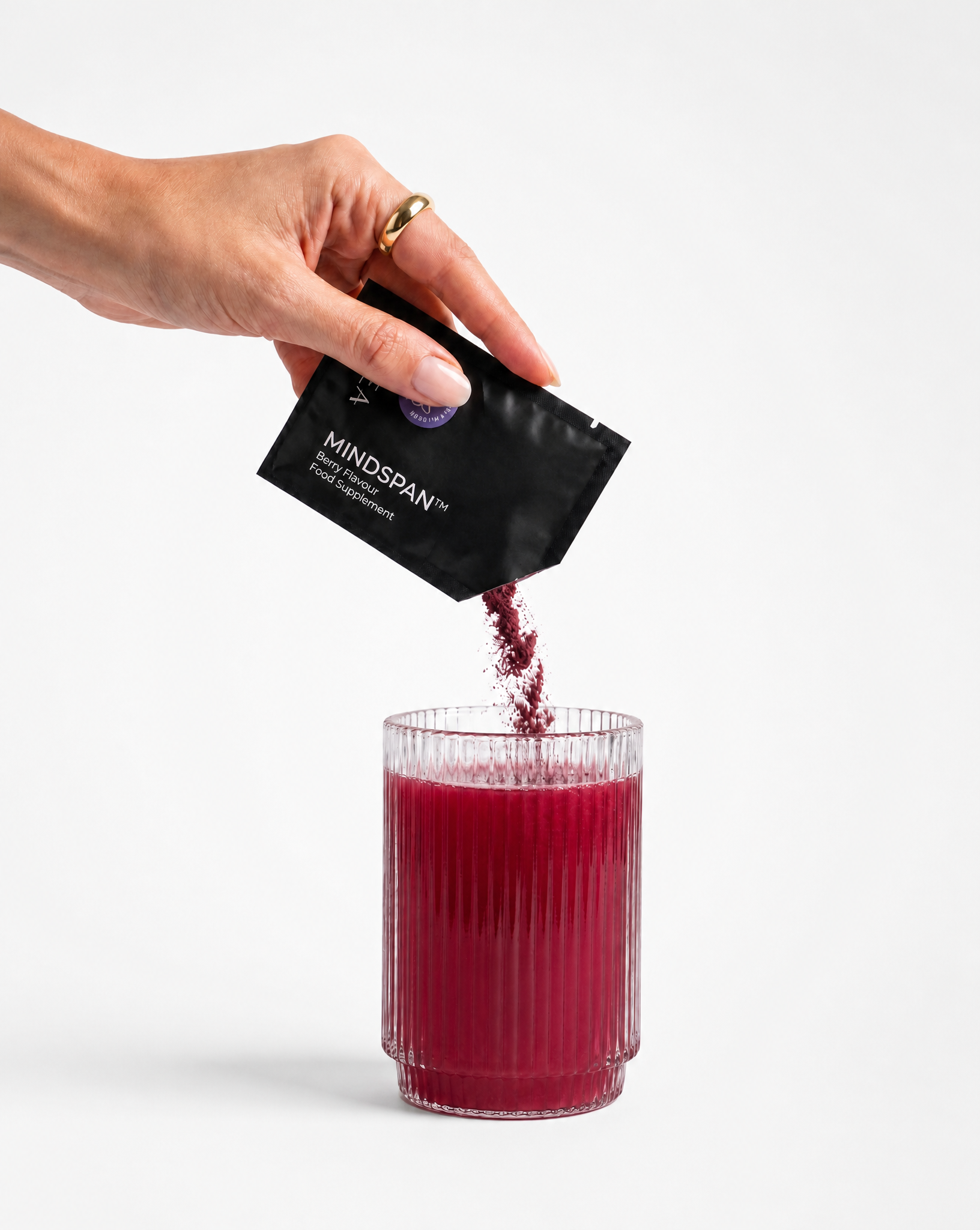
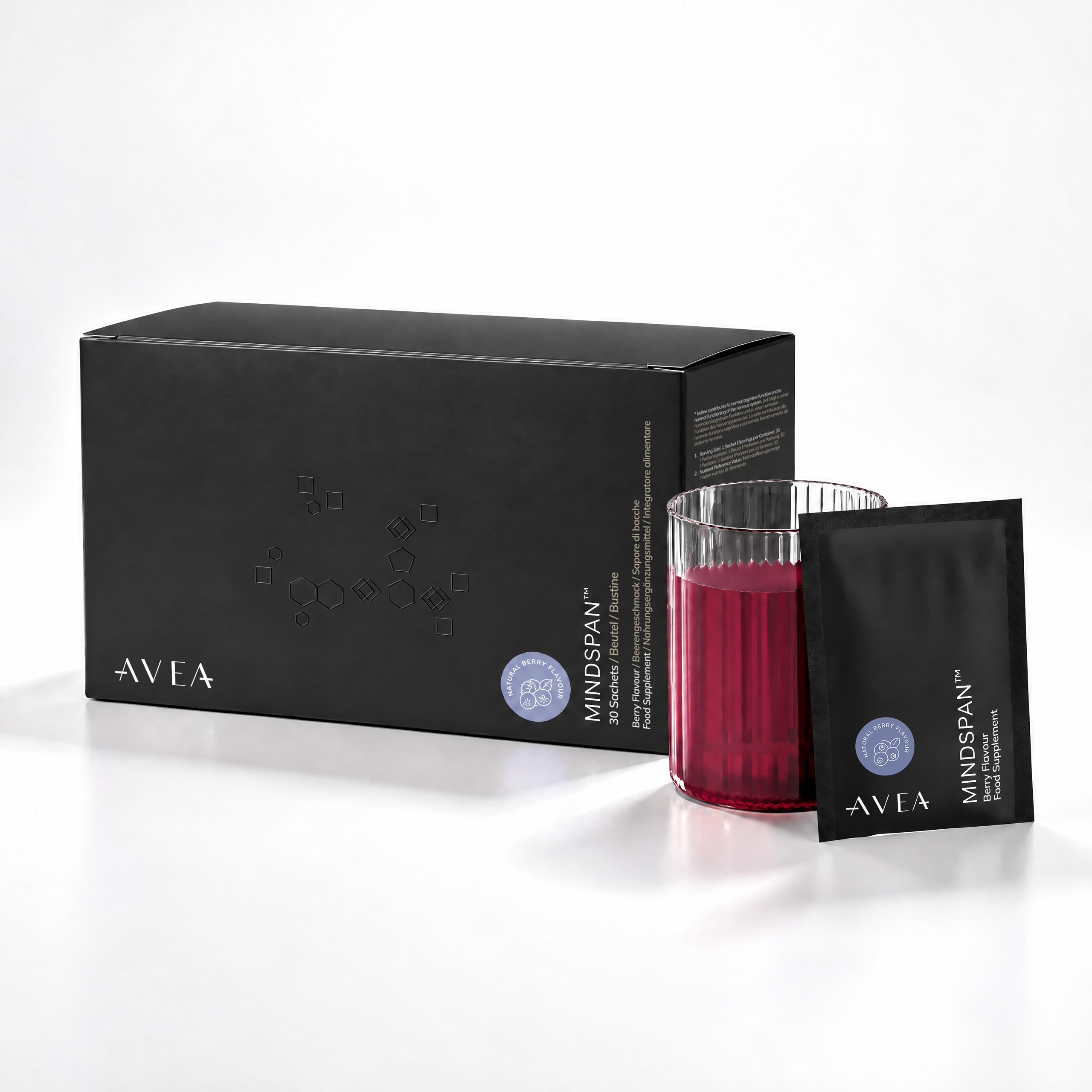
Creatine is the largest single ingredient in MindSpan™, so choosing its form was the most important decision in the formula. We use Clonapure®, a micronised creatine monohydrate blended with a small amount of phosphocreatine and calcium phosphate. Four reasons.
It is built on the best-researched form, not a novelty. Clonapure® is creatine monohydrate, the version behind twenty years of cognitive trials. Newer forms tend to arrive with bolder claims and a thinner evidence base.
It is dosed at the level the research uses. Each sachet delivers a full 3,000 mg, inside the 3 to 5 g range used in cognitive studies, with no loading phase needed. This is also why MindSpan™ is a powder rather than a capsule: three grams will not physically fit inside a capsule alongside anything else. Most cognitive formulas solve that by leaving creatine out or including a token amount. We would rather dose one ingredient at a level that means something than sprinkle ten that do not.
It actually dissolves. Ordinary creatine powder is notorious for sitting at the bottom of the glass. Micronised creatine has a far smaller particle size, so it disperses properly in water. That sounds like a detail until you consider that you are meant to drink this every morning for years.
It adds phosphocreatine, the form cells keep in reserve. Inside the cell, creatine is stored bound to a phosphate group, ready to hand it over the moment ATP runs low. Clonapure® includes a small amount of that ready-made phosphocreatine alongside the monohydrate. In a 2025 laboratory study on human nerve cells under metabolic stress, the blend supported ATP production more efficiently than plain monohydrate. That work is in cell culture, so we treat it as the reason we chose this form rather than a promise about how you will feel on Tuesday.
And it is stimulant-free. Creatine supports your brain’s own energy production rather than masking tiredness with caffeine, so there is no jitter, no afternoon crash and nothing that builds tolerance. It is something you can take every morning for years.
Creatine is only part of the picture
Creatine handles brain energy. Focus and memory need more than energy alone, so MindSpan™ adds five more ingredients, each individually dosed on the pack.
- Taurine, 1,000 mg. Involved in the signalling that keeps mental noise down, and studied for its protective effects on brain cells over time. A full gram, where most formulas use a splash.
- L-Tyrosine, 500 mg. The raw material your body turns into dopamine and noradrenaline, the messengers tied to drive and focus that get depleted under sustained stress.
- Blueberry extract, 200 mg, of which 50 mg anthocyanidins. Studied for healthy blood flow to the brain. The anthocyanidin content is declared on the label, which most products will not do.
- L-Theanine, 100 mg, from green tea extract. Alpha brain-wave activity and relaxed alertness, usually within the hour, without making you drowsy.
- Iodine, 75 mcg. Iodine contributes to normal cognitive function and to the normal functioning of the nervous system. If you have a thyroid condition or take thyroid medication, check with your doctor before adding iodine.
No caffeine, no sugar, no sweeteners. One berry-flavoured sachet in a large glass of water each morning, thirty to a box.

Final thoughts
Creatine spent thirty years shelved with the sports supplements, which is why most people have never considered it for anything above the neck. It is a fundamental part of how every cell manages energy, and the organ with the most demanding energy budget in your body is your brain.
The evidence is strongest in people whose brains are working against some kind of headwind: older, sleeping badly, eating little meat or fish, or going through a hormonal transition. By your forties, most people meet at least one of those descriptions. Give it a month and pay attention to your afternoons.
FAQs
Does creatine really help the brain, or just muscle? Both, through the same mechanism. Creatine helps regenerate ATP, and the brain is one of the body’s most energy-demanding organs. The effects are clearest in older adults, in people under stress or short on sleep, and in those who eat little meat or fish.
Will I feel it straight away? Creatine builds with daily use over three to four weeks. L-Theanine, one of the other ingredients in MindSpan™, works within the hour. Creatine is the long game.
Is it a stimulant? Will it affect my sleep? No. MindSpan™ contains no caffeine or stimulants of any kind, so it will not interfere with sleep or build tolerance.
Do I need to take it on days I don’t exercise? Yes. You are keeping a store topped up, so daily is the point.
Does it work differently for men and women? The mechanism is identical. Women tend to start with lower creatine stores, so there is more room to gain, but the reasons to take it for cognition apply to both.
Is creatine safe long term? It is among the most studied supplement ingredients there is, with a strong safety record at everyday doses over years of use. If you are pregnant, breastfeeding, taking medication or managing a health condition, including thyroid or kidney conditions, speak to your doctor first.
References
1. Smith-Ryan AE, Cabre HE, Eckerson JM, Candow DG. Creatine supplementation in women’s health: a lifespan perspective. Nutrients. 2021;13(3):877. doi:10.3390/nu13030877
2. Benton D, Donohoe R. The influence of creatine supplementation on the cognitive functioning of vegetarians and omnivores. Br J Nutr. 2011;105(7):1100-1105. doi:10.1017/S0007114510004733
3. Rae C, Digney AL, McEwan SR, Bates TC. Oral creatine monohydrate supplementation improves brain performance. Proc Biol Sci. 2003;270(1529):2147-2150. doi:10.1098/rspb.2003.2492
4. Ohayon MM, Carskadon MA, Guilleminault C, Vitiello MV. Meta-analysis of quantitative sleep parameters from childhood to old age in healthy individuals. Sleep. 2004;27(7):1255-1273. doi:10.1093/sleep/27.7.1255
5. Mosconi L, Berti V, Dyke J, et al. Menopause impacts human brain structure, connectivity, energy metabolism, and amyloid-beta deposition. Sci Rep. 2021;11:10867. doi:10.1038/s41598-021-90084-y
6. Prokopidis K, Giannos P, Triantafyllidis KK, et al. Effects of creatine supplementation on memory in healthy individuals: a systematic review and meta-analysis of randomized controlled trials. Nutr Rev. 2023;81(4):416-427. doi:10.1093/nutrit/nuac064
7. Xu C, Bi S, Zhang W, Luo L. The effects of creatine supplementation on cognitive function in adults: a systematic review and meta-analysis. Front Nutr. 2024;11:1424972. doi:10.3389/fnut.2024.1424972
8. Avgerinos KI, Spyrou N, Bougioukas KI, Kapogiannis D. Effects of creatine supplementation on cognitive function of healthy individuals: a systematic review of randomized controlled trials. Exp Gerontol. 2018;108:166-173. doi:10.1016/j.exger.2018.04.013
9. Korovljeva D, Ostojic J, Panic J, et al. The effects of 8-week creatine hydrochloride and creatine ethyl ester supplementation on cognition, clinical outcomes, and brain creatine levels in perimenopausal and menopausal women (CONCRET-MENOPA): a randomized controlled trial. J Am Nutr Assoc. 2025. doi:10.1080/27697061.2025.2551184
10. Dolan E, Gualano B, Rawson ES. Beyond muscle: the effects of creatine supplementation on brain creatine, cognitive processing, and traumatic brain injury. Eur J Sport Sci. 2019;19(1):1-14. doi:10.1080/17461391.2018.1500644
11. Hernandez-Bueno A, Lapena-Luzon T, Mora-Moron P, et al. Clonapure vs creatine monohydrate on ATP synthesis in a human neuron cell line. J Neurol Exp Neural Sci. 2025;7:158. doi:10.29011/2577-1442.100058
12. Jongkees BJ, Hommel B, Kuhn S, Colzato LS. Effect of tyrosine supplementation on clinical and healthy populations under stress or cognitive demands: a review. J Psychiatr Res. 2015;70:50-57. doi:10.1016/j.jpsychires.2015.08.014
13. Wood E, Hein S, Mesnage R, et al. Wild blueberry (poly)phenols can improve vascular function and cognitive performance in healthy older individuals: a double-blind randomized controlled trial. Am J Clin Nutr. 2023;117(6):1306-1319. doi:10.1016/j.ajcnut.2023.03.017
14. EFSA Panel on Dietetic Products, Nutrition and Allergies. Scientific opinion on the substantiation of health claims related to iodine (ID 273). EFSA Journal. 2010;8(10):1800. doi:10.2903/j.efsa.2010.1800