



For years, collagen supplements have been built on a simple idea: “If collagen declines as we age, we can counteract that by consuming more collagen.”
But a newly published peer-reviewed study in the renowned scientific journal Nature’s npj Aging suggests something very different, and far more interesting.
Researchers at ETH Zurich found that the body can’t actually use collagen the way people assume. Instead, consumed animal collagen will always be broken down into amino acids, and then only partially be taken up by the body to form new human collagen.
The researchers found that it is much more efficient to provide the body with a precise blend of the three naturally occurring amino acids that form collagen: glycine, proline, and hydroxyproline.
In human skin cells, the 3:1:1 amino acid ratio stimulated collagen gene expression up to 4× more than standard collagen peptides. This effect was consistent with benefits observed in model organisms and humans.
Understanding this new mechanism changes everything about how we think of collagen, why it declines, and what it really takes to rebuild it.
Collagen supplements often don’t work because the body cannot use whole collagen proteins in the way most people assume. When you ingest animal-derived collagen, it is broken down into individual amino acids during digestion and only partially reassembled into human collagen, if at all. Without the correct amino acid ratios, stimulation of collagen-producing fibroblasts, and essential co-factors like vitamin C, most collagen supplements fail to meaningfully increase collagen production in the skin and connective tissue.
In this article
Why Collagen Supplements Don’t Work
Why collagen supplements don’t work comes down to how the human body actually digests and uses collagen.
When you consume animal-derived collagen peptides, your digestive system does not absorb them as intact collagen molecules. Instead, they are broken down into individual amino acids and small peptide fragments during digestion. These fragments then enter the general amino-acid pool and are used wherever the body needs protein — for muscle repair, energy metabolism, enzymes, or organ function — not specifically for building new collagen in the skin or connective tissue.
In other words, taking collagen does not directly deliver collagen to your skin.
Even worse, most collagen supplements fail to provide the precise amino-acid pattern required to signal fibroblasts (the body’s collagen-producing cells) to actually synthesize new collagen. Human collagen formation depends on receiving glycine, proline, and hydroxyproline in a very specific 3:1:1 ratio, along with the correct biological co-factors to activate collagen production.
Without that precise ratio, fibroblast activation, and essential co-factors like vitamin C and alpha-ketoglutarate (AKG), collagen synthesis remains inefficient — no matter how much collagen protein you consume.
This is why most traditional collagen supplements do not meaningfully increase collagen production in human skin, even after months of daily use.
What is collagen and why is it important?
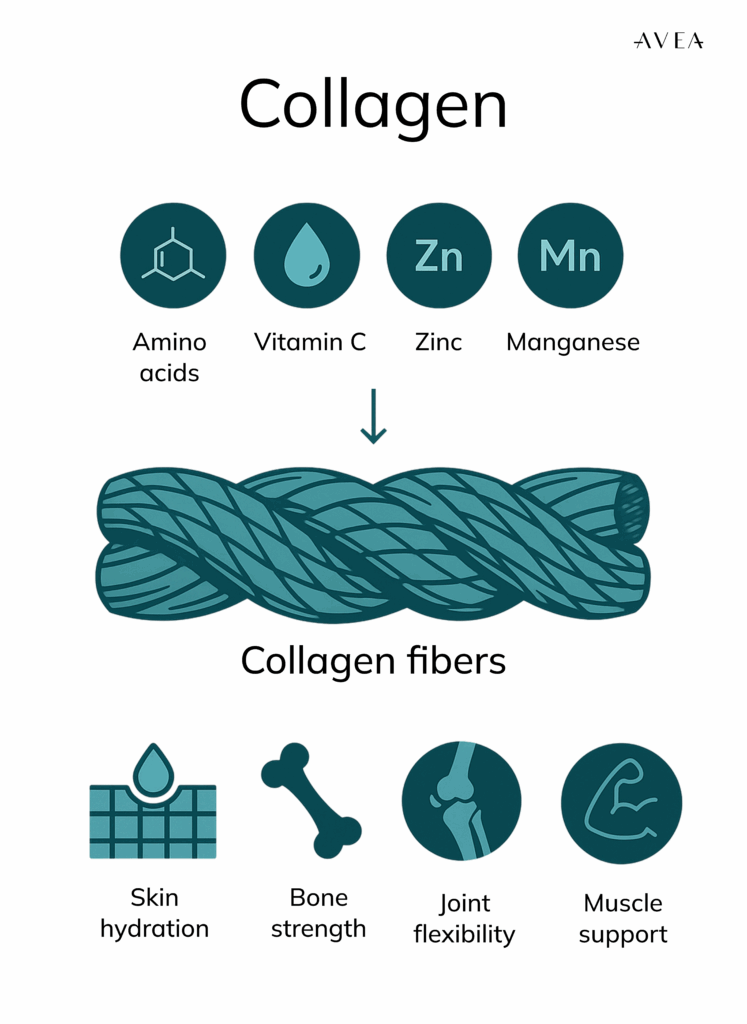
Collagen is the most abundant protein in the human body, making up around 30% of all protein. It’s built from 19 amino acids – with glycine, proline, and hydroxyproline forming the core structure. Together with essential nutrients such as vitamin C, zinc, copper, and manganese, these amino acids form strong, rope-like fibers that provide structure and support throughout the body.
Collagen is responsible for the strength and resilience of your skin, bones, muscles, joints, tendons, ligaments, blood vessels, and even your gut lining. In many ways, it acts as the “glue” that holds your body together.
When collagen levels are high, skin appears firm, smooth, and elastic; joints feel flexible; muscles recover faster; and your body maintains structural integrity. A healthy collagen network is central to both how youthful you look and how well you function.
Why does collagen decline with age?
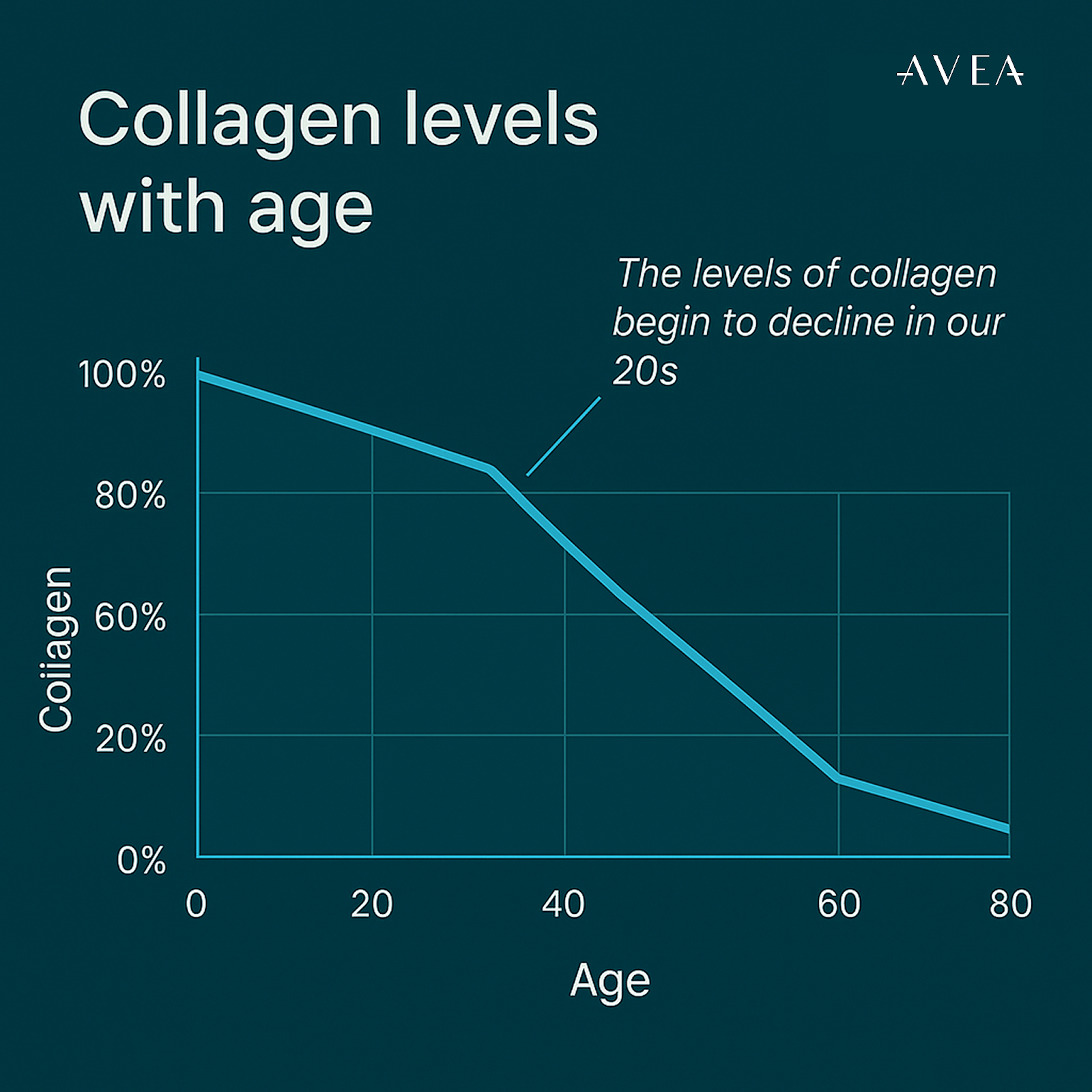
Starting in your mid-20s, collagen production naturally declines by about 1–2% per year, and by your 60s, you may have lost up to half of your collagen reserve.
This is due to:
- Reduced fibroblast activity (the cells that make collagen)
- Increased collagen-degrading enzymes
- Hormonal changes
- Oxidative stress and inflammation
In women, this decline accelerates significantly during and after menopause due to the sharp drop in oestrogen, a hormone that helps regulate collagen synthesis.
Lifestyle factors (excess sun exposure, high-sugar diets, smoking, lack of sleep, chronic stress) also accelerate this decline, leading to wrinkles, dryness, joint stiffness, slower recovery, and a loss of skin firmness.
How collagen supports and transforms skin health?
Your skin is composed of a variety of essential elements such as proteins, lipids (fats), water, and minerals that all work together like the intricate parts of a finely tuned machine. But among all these components, collagen stands out as the true secret to youthful skin. While lipids help lock in moisture and water keeps skin plump, it’s collagen that acts as the main foundation – the scaffolding that gives your skin its structure, strength, and elasticity.
Collagen loss naturally occurs while we age, and this is one of the main mechanisms of skin aging as when the dense network of collagen that is holding everything firm and in place weakens, the skin starts to sag, wrinkles occur, and we start to lose that firm, radiant glow.
Where do most collagen supplements fall short?
Collagen supplements have become popular for skin health, but not all collagen effectively supports collagen production. Many formulas simply provide protein without addressing what the body needs to build new collagen. Traditional collagen often falls short for 3 reasons:
- Poor absorption
Whole collagen molecules from animals are too large to be absorbed directly by our cells. Even hydrolysed collagen has to be broken down into amino-acid fragments by the body, many of which are used as generic protein instead of activating collagen synthesis. - Lack of stimulation
Many supplements only provide raw protein but fail to actively stimulate your body’s own collagen-producing cells (fibroblasts). They deliver materials but don’t switch on the “factory” to build new collagen. - Missing essential co-factors
Collagen synthesis requires essential nutrients like Vitamin C and Zinc to work. These crucial co-factors are often missing from supplements, making them incomplete.
An effective collagen supplement must be bioavailable, biologically meaningful, and include the nutrients that activate collagen synthesis.
Learn what to look for in a collagen supplement here.
The science of Collagen Activator
To rebuild strong, healthy collagen fibres that improve firmness, elasticity, and radiance, your body requires a precise combination of ingredients and biological signals.
Modern research shows that collagen synthesis depends on three core pillars:
1. Collagen building blocks (amino acids)
Collagen is made primarily from three amino acids: glycine, proline, and hydroxyproline – which together make up over half of collagen’s structure. Most modern diets today, especially plant-based diets, provide very little of them, as they are mainly found in animal skin and connective tissues.
Traditionally, supplements tried to solve this by offering whole collagen peptides, but a newly published peer-reviewed study in Nature’s npj Aging has made the breakthrough discovery that your body isn’t actually able to use whole collagen molecules effectively.
Instead, it requires a precise 3:1:1 ratio of amino acids, the building blocks for collagen, which act as the raw material – like a biological signal for your fibroblasts to make more collagen.
The research showed that a precise vegan amino acid blend stimulates collagen production up to 4× more effectively than traditional collagen peptides, and revealed that collagen synthesis depends on specific building blocks in a specific pattern, and not on consuming whole collagen proteins.
2. Supportive co-factors (activation & stabilisation)
Beyond amino acids, the body requires support from various nutrients and cellular processes to assemble, fold, and stabilise collagen fibres.
One of the most critical co-factors in collagen synthesis is Vitamin C. It supports the enzymatic process that links amino acids together, and it stabilises newly formed collagen fibres by enabling hydroxylation – ensuring they are strong, resilient, and properly structured.
Another essential supporter is Alpha-Ketoglutarate (AKG). Beyond general metabolic support, AKG acts as a co-substrate in the hydroxylation of proline and lysine, working in direct synergy with the amino acids to stabilise the collagen triple helix. This makes AKG a key enabler of effective collagen renewal, helping skin maintain structure, firmness, and regenerative capacity.
3. Protective antioxidants (collagen preservation)
Newly formed collagen fibres are fragile and can be easily damaged by UV radiation, inflammation, oxidative stress and pollution.
Antioxidants like Astaxanthin, Vitamin C, and certain polyphenols help protect collagen from breakdown and maintain its structure over time. Astaxanthin in particular has been shown in research to support skin elasticity and protect collagen from oxidative degradation.
Watch this video to learn how the AVEA Collagen Activator stands out from other collagen supplements and what makes it uniquely effective by Collin Ewald, Scientist and Professor at ETH Zurich.
Why AVEA developed the patented Collagen Activator
Based on breakthrough research conducted at ETH Zurich and now published in Natures npj Aging, AVEA has worked with a team of scientists to develop a more effective way to replenish the body’s natural collagen levels.
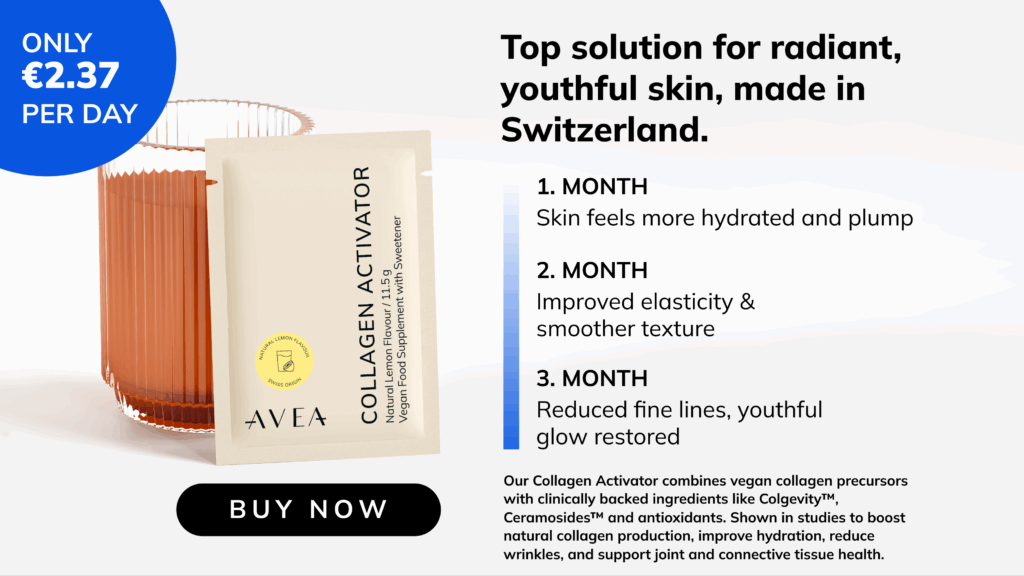
The Collagen Activator features Colgevity™ – our patented, 100% vegan collagen precursor complex developed in partnership with leading longevity scientists at ETH Zurich.
Unlike traditional animal-derived collagen peptides which must be broken down into smaller fragments before your body can utilise them, our formula provides the optimised building blocks to boost the body’s collagen regeneration for deeper, longer lasting results. The Collagen Activator:
- Helps the body replenish its collagen levels with a patented formula discovered at ETH Zurich to counteract age-related collagen decline
- Has been clinically shown to improve elasticity and firmness, helping visibly reduce fine lines and early signs of skin ageing
- Boosts skin hydration and smoothness, supporting a more radiant, youthful complexion
- Strengthens hair and nails with targeted micronutrients essential for keratin and connective-tissue structure
- Backed by a peer-reviewed study in Nature’s npj Aging showing superior performance vs. traditional collagen
What is Colgevity™, our patented collagen precursor?
Colgevity™ is a patented, vegan collagen precursor designed around the 3:1:1 amino-acid ratio identified in the peer-reviewed study published in Nature’s npj Aging.
This study demonstrated that the body does not respond optimally to whole collagen peptides. Instead, collagen synthesis is activated when fibroblasts receive glycine, proline, and hydroxyproline in this precise ratio – the same ratio that naturally appears in human collagen.
Colgevity™ delivers these three collagen-building amino acids in the exact composition validated by the study, providing a clear and efficient biological signal for collagen production.
This targeted approach has been shown to stimulate collagen up to 4x more effectively than traditional animal-derived collagen peptides.
To maximise the results, the Collagen Activator formula combines Colgevity™ with key biological co-factors and antioxidants that help your body form, stabilise, and protect new collagen fibres:
- Acerola cherry extract (Vitamin C) – essential for collagen cross-linking and stability. Vitamin C also supports moisture retention and strengthens the skin’s resilience against daily oxidative stress.
- Alpha-Ketoglutarate (AKG) – a central molecule in cellular metabolism that supports efficient collagen synthesis and contributes to the body’s natural repair processes.
- Astaxanthin – one of the most powerful natural antioxidants, providing targeted protection against oxidative and UV-induced collagen damage.
Our Collagen Activator is also one of the very few truly 100% vegan natural collagen supplements available today.
While most collagen products still rely on animal-derived sources like bovine or marine collagen, our innovative Colgevity™ precursor offers a 100% plant-based, cruelty-free solution with superior effectiveness.
Watch this video to understand how each ingredient in the AVEA Collagen Activator works, explained by Collin Ewald, Scientist and Professor at ETH Zurich.
Clinically validated results
How do you measure the effects of a collagen supplement?
Thanks to advances in dermatological and epigenetic testing, it is now possible to objectively measure the impact of collagen support on the skin – from hydration and texture to elasticity and biological age.
Tools such as VISIA® high-resolution facial imaging, Corneometer hydration testing, Cutometer elasticity analysis, and epigenetic clocks allow researchers to track meaningful changes over time with scientific precision.
The 6-Month Human Study in Zurich
To evaluate the effectiveness of the amino-acid ratio identified in the ETH Zurich research, a 6-month observational clinical study was conducted at Hautwerk Dermatology Clinic in Zurich, led by dermatologist Dr. Bettina Rümmelein.
The study used the exact 3:1:1 amino-acid composition validated in the Nature’s npj Aging publication.
A total of 66 participants (ages 35–68) were analysed using advanced dermatological assessments at baseline, 1 month, 3 months, and 6 months.
What the Study Measured
- Skin hydration (Corneometer)
- Skin texture & spots (VISIA® imaging)
- Elasticity & firmness (Cutometer)
- Biological age (TruMe saliva-based epigenetic clock)
Key Study Outcomes
Skin Improvements (3 Months)
Across the participant group, researchers observed measurable improvements in skin quality:
- +34.6% improvement in skin hydration
- +8.5% in skin texture
- +5% skin elasticity
- Significant hydration increases in upper arm and forearm skin
- Most participants self-reported smoother, healthier, more hydrated skin
These improvements reflect changes in the skin’s underlying collagen network, not just surface hydration.
Biological Age Reduction (6 Months)
The study also assessed internal markers of aging using epigenetic testing.
- Average reduction of biological age: –1.4 years
- Similar improvements in both men and women
- Largest individual improvements: –12.1 years (female) and –8.9 years (male)
- Participants with a higher starting biological age saw the greatest benefits
- 88% of participants either maintained or reduced their biological age
This suggests that collagen support via the 3:1:1 amino-acid ratio may play a meaningful role in long-term skin and cellular health.