





Many people choose plant based diets for their health benefits or because of ethical considerations. But even a well-structured vegan or vegetarian diet does not automatically cover every nutrient the body needs. Certain vitamins and fatty acids are either absent from plant foods or present in forms that are not easily converted into their biologically active state.
This is not a flaw of plant-based nutrition. It is simply a physiological reality. Vitamin B12, long-chain omega-3s such as EPA and DHA, vitamin D3, and specific collagen-related amino acids are among the nutrients that require closer attention.
The question is therefore not whether to supplement, but how to do so intelligently based on biology rather than what is currently trending.
What Are the Best Supplements for Vegans and Vegetarians?
The best supplements for vegans and vegetarians typically include:
- Vitamin B12, which is essential for nerve function, red blood cell formation, and energy metabolism and is primarily found in animal products.
- Vitamin D3 (vegan source), which supports bone health, immunity, and calcium regulation, particularly in regions with limited sun exposure.
- Omega-3 fatty acids (EPA and DHA from algae), which are important for brain and cardiovascular health and are not reliably produced from plant-based ALA alone.
- Collagen-supporting nutrients, since collagen itself is animal-derived and plant-based strategies must focus on supporting the body’s own collagen production.
The right approach depends on individual diet, lifestyle, age, and health status. Still, these four areas represent the most consistent nutritional considerations for people following vegan or vegetarian diets.
Why Vegan and Vegetarian Diets May Require Targeted Supplementation
Plant-based diets are not inherently lacking nutrients. In many cases, they are nutritionally dense and metabolically supportive. The need for supplementation arises not from dietary failure, but from biology.
Some nutrients are found primarily in animal-based foods. Others are present in plant foods in forms that require conversion inside the body – a process that varies from person to person. Certain compounds decline naturally with age, regardless of diet, and may require additional support.
Understanding these patterns allows supplementation to become intentional rather than reactive.
Vitamin B12 – The Most Critical Nutrient for Plant-Based Diets
Vitamin B12 is widely regarded as the most important supplement for vegans and vegetarians, and this position is well supported by nutritional science.
Unlike many other vitamins, B12 is found almost exclusively in animal-derived foods such as meat, fish, dairy, and eggs. While fortified plant foods may contain added B12, intake can fluctuate depending on consistency and dietary choices.
If you would like a deeper exploration of how B12 functions in the body and how it interacts with vitamin B6, you can read our complete guide to vitamin B6 and B12.
Vitamin B12 plays a central role in red blood cell formation, DNA synthesis, neurological signaling, and energy metabolism. Without sufficient levels, the body cannot produce healthy red blood cells, which may result in megaloblastic anaemia, fatigue, weakness, and shortness of breath. Over time, deficiency can affect the nervous system, contributing to numbness, tingling sensations, memory changes, and cognitive slowing.
Because the liver stores B12, deficiency may take years to become clinically visible. This delayed onset is one reason regular intake and, where appropriate, blood testing are recommended for individuals following long-term plant-based diets.
Vitamin B6 works closely with B12 in homocysteine metabolism, a pathway associated with cardiovascular and neurological health. While B6 is more accessible in plant foods, its interaction with B12 explains why these nutrients are often considered together in formulation design.
Vitamin D3 – Why Sunlight Is Not Always Enough
Vitamin D is often referred to as the “sunshine vitamin” because it can be synthesised in the skin through exposure to ultraviolet B radiation. In practice, however, maintaining optimal vitamin D levels is influenced by geography, season, indoor lifestyles, sunscreen use, skin pigmentation, and age-related changes in skin synthesis.
Vitamin D3 supports calcium absorption, bone mineralisation, immune regulation, muscle function, and inflammatory balance. While small amounts can be obtained through diet, natural food sources are primarily animal-based. Mushrooms may contain vitamin D2, but vitamin D3 (cholecalciferol) is generally considered more effective at raising and sustaining circulating levels.
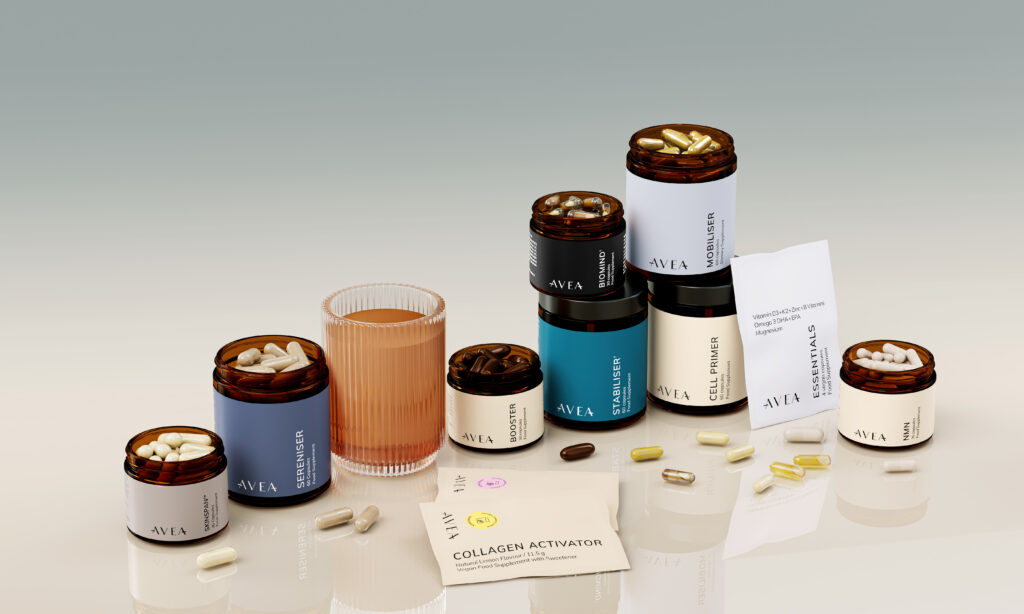
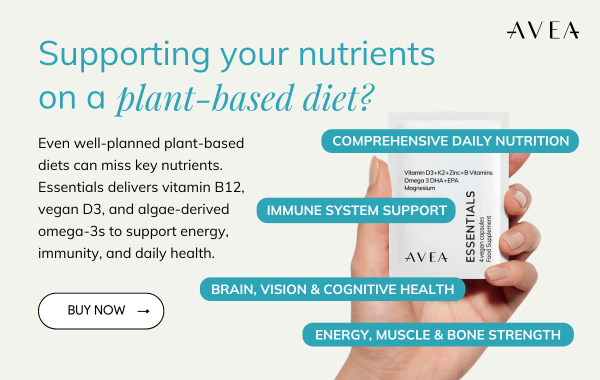
Traditionally, most vitamin D3 supplements were derived from lanolin (a natural secretion from the sebaceous glands of sheep), making them unsuitable for strict vegans. Today, plant-based D3 sourced from lichen (a partnership between a fungus and algae) provides the same bioactive form without animal origin, allowing individuals to align their supplements with their dietary principles. AVEA’s Essentials uses this high-quality 100% vegan vitamin D3 derived from lichen.
Because vitamin D status cannot be accurately estimated based on sunlight exposure alone, blood testing remains the most reliable way to assess individual needs.
Omega-3 (EPA and DHA) – Why Algae Is the Direct Source
Omega-3 fatty acids contribute to brain structure, cardiovascular health, and balanced inflammatory signaling. Many plant-based diets contain the Omega-3 fatty acid ALA (alpha-linolenic acid), found in flaxseeds, chia seeds, walnuts, and hemp.
However, ALA must be converted into EPA and DHA to perform many of the functions associated with long-chain omega-3s. This conversion is limited and highly variable between individuals, particularly for DHA.
For vegans and vegetarians who do not consume fish, algae-derived EPA and DHA offer a practical plant-based alternative. For example, AVEA includes algae-sourced EPA and DHA in its Essentials product, providing a direct source of long-chain omega-3s without relying on fish oil.
Because EPA and DHA are highly unsaturated fatty acids, they are structurally prone to oxidation when exposed to heat, light, or oxygen. Oxidised omega-3s lose biological integrity and may generate unwanted by-products. For this reason, manufacturing standards, antioxidant protection, and controlled manufacturing conditions are critical in preserving freshness and functional integrity. In Essentials, AVEA uses algae-derived omega-3s produced under controlled conditions that prioritise stability and minimise oxidative degradation.
What About Collagen If You’re Vegan?
Collagen supplements are typically derived from bovine, marine, or poultry tissues. For individuals following a vegan or vegetarian lifestyle, this presents an obvious limitation.
Collagen is the most abundant structural protein in the human body and is particularly rich in the amino acids glycine, proline, and hydroxyproline. Vitamin C is required as a cofactor to stabilise collagen during synthesis. With age, the body’s natural collagen production declines, contributing to visible changes in skin elasticity and connective tissue resilience.
Traditional collagen supplements provide pre-formed peptides that must first be digested before their amino acids become available for use to build new human collagen. An alternative strategy focuses on directly supplying the key amino acids required for collagen synthesis in defined ratios inspired by collagen’s native structure.
A study published in npj Aging (Nature Portfolio) investigated how specific amino acid combinations can boost collagen production in skin cells. The study shows that a combination of the vegan amino acids glycine, proline, and hydroxyproline can increase collagen production more effectively than conventional collagen.
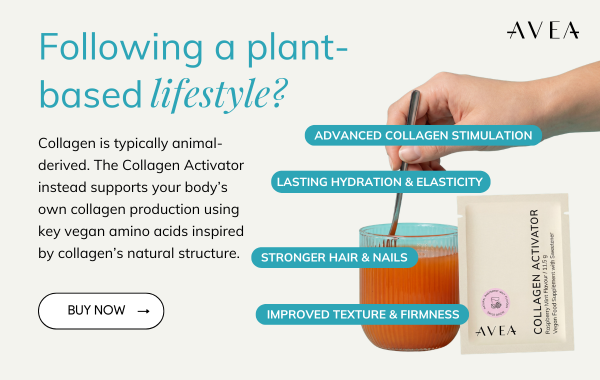
Based on this research, AVEA developed the AVEA Collagen Activator using a defined amino acid composition inspired by collagen’s structure, rather than using animal collagen. The focus is on supporting natural collagen synthesis from within.
For those following a vegan or vegetarian diet, this offers a way to address age related collagen loss without relying on animal-derived ingredients.
How to Build a Smart Supplement Routine on a Plant-Based Diet
A thoughtful supplementation strategy is built on adequacy rather than excess.
For most plant-based eaters, maintaining sufficient vitamin B12 intake is essential. Vitamin D3 may also require attention depending on geographic location, lifestyle, and baseline levels. Some individuals prefer a structured formulation that combines foundational nutrients such as vitamin B12, vegan D3, and algae-derived omega-3 into one daily routine.
Beyond foundational nutrients, decisions should be guided by physiology. Where conversion processes are limited – as in the case of ALA to DHA – direct intake may be appropriate. Where structural proteins decline with age, supporting endogenous production pathways may be more aligned than replacing them with animal-derived sources.
Whenever possible, testing should guide supplementation. Assessing B12 and vitamin D levels provides clarity, and dosage should be adjusted based on age, health status, and professional guidance. More is not necessarily better, and high-dose stacking is rarely superior to targeted support.
The Bottom Line
A well-planned vegan or vegetarian diet still requires attention to a few key nutrients.
For most people, that means ensuring adequate vitamin B12, maintaining sufficient vitamin D3 levels, considering algae-derived EPA and DHA, and approaching collagen support in a plant-aligned way.
AVEA’s Essentials is the ideal product for vegans and vegetarians as it combines all vegan and high quality vitamin B12, vitamin D3 and omega-3s in one practical daily sachet that fits perfectly in your pocket or purse.
Supplementation does not need to be complicated. It simply needs to reflect the biological realities of a plant-based diet.