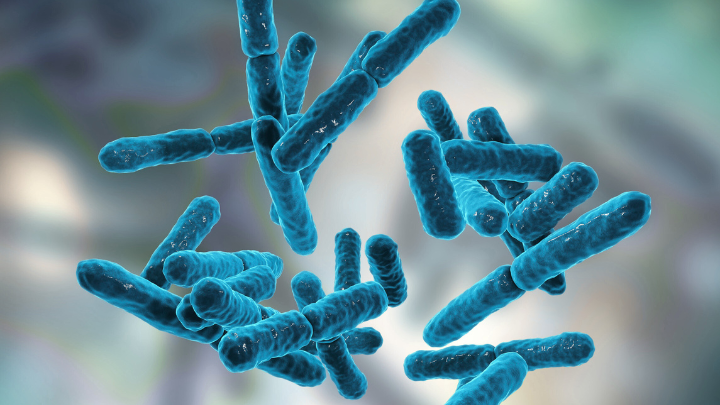







Your gut is home to trillions of microorganisms: bacteria, fungi, viruses, and other microbes that together make up the gut microbiome. Far from being passive passengers, these microbes play an active and essential role in how your body works.
From digestion and nutrient absorption to mood regulation, immune defence, and inflammation control, the gut microbiome is involved in nearly every aspect of your health. Supporting it may be one of the most effective things you can do for long-term vitality.
In this article
What Is the Gut Microbiome?
The gut microbiome refers to the vast ecosystem of microbes that live primarily in the large intestine. These microorganisms interact with your body in a symbiotic way: they break down food your body can’t digest on its own, produce key vitamins like B12 and K2, train your immune system, and help maintain the integrity of the gut lining.
When your microbiome is balanced and diverse, it supports optimal digestion, steady energy, strong immunity, and even mental clarity. But when it becomes imbalanced—a state called dysbiosis—you may experience bloating, fatigue, immune reactivity, skin flare-ups, or mood disturbances.
A resilient microbiome is one that contains a wide variety of beneficial bacteria that coexist harmoniously and adapt to challenges like stress, diet changes, or medications.
The Gut-Brain Axis: How Your Microbiome Affects Mood and Focus
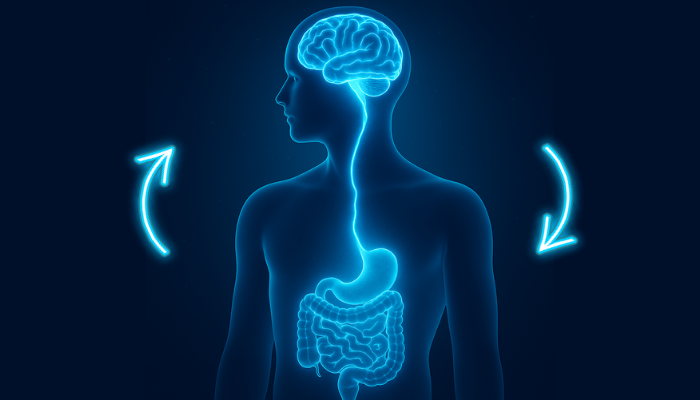
The gut and brain are closely connected through the gut-brain axis, a bidirectional network of nerves, hormones, and immune signals. This means that what’s happening in your gut can directly influence how you feel, think, and respond to stress.
One of the most striking facts: around 90% of your body’s serotonin—a neurotransmitter essential for mood, sleep, and emotional regulation—is produced in the gut. Gut bacteria also produce short-chain fatty acids like butyrate, which have anti-inflammatory effects and influence the brain via the vagus nerve.
This is why an imbalanced gut microbiome isn’t just a digestive issue—it can also contribute to brain fog, low mood, and poor stress tolerance.
Why a Healthy Microbiome Matters
A well-functioning gut microbiome supports:
- Digestion and nutrient absorption
Your microbes help break down fibres and complex carbohydrates, making nutrients more bioavailable. - Immune resilience
More than 70% of your immune system is housed in the gut. Microbial balance is essential to keeping your defences alert, but not overreactive. - Mood and cognitive function
Through serotonin, GABA, and other neuroactive compounds, your gut bacteria directly influence your mental well-being. - Inflammation regulation
A healthy microbiome reduces chronic low-grade inflammation, which is a key driver of biological ageing and many modern diseases. - Metabolic balance
Gut microbes influence how your body processes sugars and fats, affecting energy, appetite, and metabolic health.
How to Support Your Gut Microbiome
Improving gut health is less about taking shortcuts and more about building consistent, microbiome-friendly habits. Here’s how:
- Eat a variety of fibre-rich foods
Fruits, vegetables, legumes, nuts, seeds, and whole grains feed beneficial bacteria. Aim for 30+ plant foods per week to increase diversity. - Include fermented foods
Yogurt, kefir, kimchi, sauerkraut, and miso contain live bacterial cultures that help replenish your microbiome. - Add prebiotic foods
Prebiotics are fibres that selectively feed good bacteria. Garlic, onions, asparagus, leeks, chicory, oats, and green bananas are rich in prebiotics. - Reduce ultra-processed foods and sugar
Highly processed foods promote harmful bacteria, disrupt microbial balance, and damage the gut lining. - Support lifestyle factors
Sleep, movement, and stress regulation all shape the gut microbiome. Deep sleep helps repair the gut lining, while exercise increases bacterial diversity. Chronic stress, on the other hand, can alter microbial composition in as little as 24 hours. - Consider probiotic supplementation
Probiotics can help restore microbial balance, particularly after antibiotic use, travel, illness, or periods of high stress.
What Are Probiotics?
Probiotics are live microorganisms that, when consumed in adequate amounts, confer health benefits—primarily by influencing the composition and activity of the gut microbiome.
Probiotics work by:
- Introducing beneficial strains that crowd out harmful microbes
- Supporting the production of antimicrobial and anti-inflammatory compounds
- Strengthening the gut lining and tight junctions
- Modulating immune function and calming overactive responses
- Enhancing nutrient metabolism and digestion
Different probiotic strains have different effects. For example, some target lactose digestion, others reduce bloating, and others influence neurotransmitter production.
What to Look for in a High-Quality Probiotic
1. Clinically studied strains
The most trusted probiotics contain well-researched strains (specific types of bacteria) from genera such as Lactobacillus, Bifidobacterium, and Streptococcus. Note that different probiotic strains provide different health benefits. Some support digestion, others boost immune health, or some improve mood. So choosing a probiotic supplement, whether it’s in capsule, powder, or beverage form, really depends on your specific needs.
2. Appropriate CFU count
CFU stands for Colony Forming Units—the number of live organisms per dose. Effective products typically provide 10 to 50 billion CFU. More isn’t always better, but consistent dosing with the right strains is essential.
3. Microbial diversity
The gut is a diverse ecosystem. Multi-strain probiotics offer broader support by mimicking this natural complexity.
4. Stable and protected delivery
Probiotics must survive stomach acid and reach the intestines alive. Advanced technologies like Duocap® (capsule-in-capsule) help ensure this, significantly improving efficacy.
Introducing AVEA Biomind: A Targeted Approach to Gut and Brain Health
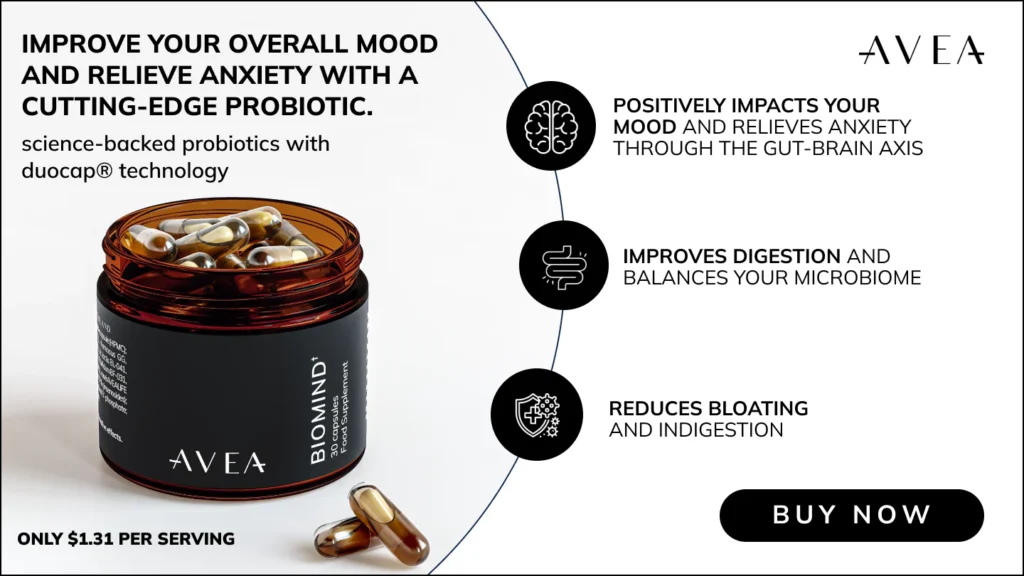
AVEA Biomind is a next-generation probiotic designed to support the gut microbiome, immune system, and cognitive resilience in one comprehensive formula.
It contains 10 carefully selected strains, delivering a total of 30 billion CFU per serving:
- Lactobacillus casei AVEALIFE 101 – supports gut lining integrity and immune balance
- Bifidobacterium breve AVEALIFE 201 – reduces intestinal inflammation and supports colon health
- Lactobacillus rhamnosus GG – one of the most researched strains for immune support and gut resilience
- Streptococcus thermophilus ST-251 – improves lactose digestion and soothes digestive discomfort
- Bifidobacterium longum BL-021 – modulates stress response and supports the gut-brain axis
- Bifidobacterium lactis BI-041 – promotes regularity and strengthens immunity
- Lactobacillus plantarum LP-141 – reduces bloating and supports gut barrier function
- Lactobacillus paracasei LPC-101 – enhances resilience to stress and immune challenges
- Bifidobacterium bifidum BF-031 – supports microbial diversity and anti-inflammatory activity
- Lactobacillus acidophilus LA-121 – helps nutrient absorption and inhibits harmful microbes
Each strain is included for its unique benefits—whether supporting gut barrier function, reducing digestive discomfort, enhancing immune function, or influencing the gut-brain axis.
Biomind also includes:
- Panax ginseng root extract – a powerful adaptogen shown to improve mental clarity, stress resilience, and fatigue.
- Vitamin B6 and Vitamin B12 – both in active forms, supporting energy metabolism, neurotransmitter function, and nervous system health.
- Duocap® delivery system – ensuring the probiotics reach the intestine alive and active.
Taken daily, Biomind supports microbial balance, promotes digestive ease, and contributes to sharper focus and better stress regulation.
Conclusion
The gut microbiome is no longer a fringe topic—it’s central to health, performance, and longevity. A well-nourished microbiome supports digestion, immunity, mood, and energy from the inside out.
Small daily choices—fibre-rich foods, prebiotics, sleep, stress regulation, and a targeted probiotic—can have profound long-term effects.
AVEA Biomind brings together the most researched strains, smart delivery, and cognitive-enhancing nutrients into one precise formula. It’s a next-generation approach to gut health—designed not only to improve digestion but to help you think more clearly, feel more resilient, and age more gracefully.